CE Marking
EU Regulation
Confirmity Assessment
How Indian Steel Manufacturers Can Export to Europe in 2026: The Complete EU Compliance Roadmap
By Technical Editorial Team
12 Min Read
9 Aug 2026
Table Of Contents
- India to Europe: European Market Requirements, Certification & Compliance Guide for Manufacturers
- India to Europe: More Than a Simple Export Journey
- Identify Your Product and Applicable European Requirements
- How to Determine the Right Certification Route
- Understand the European Standards Relevant to Your Product
- EN 1090
- EN 10204 Type 3.2
- EN ISO 3834
- PED 2014/68/EU
- EU CBAM
- Your Factory Is Part of Your European Compliance
- Inspection and Testing: Create Evidence of Conformity
- CE Marking: A Regulatory Mark, Not a Universal Quality Certificate
- 10-Point European Market Readiness Checklist for Indian Manufacturers
- Frequently Asked Questions
- Expert Insight: European Market Readiness Is More Than Certification
Key Takeaways
EU market access requires product-specific compliance.
Technical documents and traceability must be ready.
Manufacturing quality must meet applicable EU standards.
Verified compliance reduces export risks and delays.

India to Europe: European Market Requirements, Certification & Compliance Guide for Manufacturers
You got an order from a European customer, and thankfully you have the product available and at a good price.But now there’s a question: Is your factory prepared to meet the European market’s requirements?
European buyers and regulators don’t just care about the product itself.
They need proof that it meets all the necessary standards.This includes showing that the materials used can be traced back, that the product has been inspected and tested, and that all the technical documents are in order.In some cases, they also need a CE marking or a certificate showing the product has been assessed.Plus, they want verified information about the product’s emissions.
So the question isn’t just, “Can you make the product?” It’s actually, “Can you show that your product, the way it’s made, the controls in place, and all the documentation meet the standards required for the European market?”
That’s where being ready for the European market really starts.
India to Europe: More Than a Simple Export Journey
First, figure out if the product is right for the market.Then, check what certifications are needed.
As mentioned earlier, the process isn’t just:
Make → Pack → Ship
It’s more like:
Make → Qualify → Control → Trace → Check → Record → Certify → Ship
This depends on the product, how it’s used, European laws, relevant standards, and what the customer wants.
In simple words: –
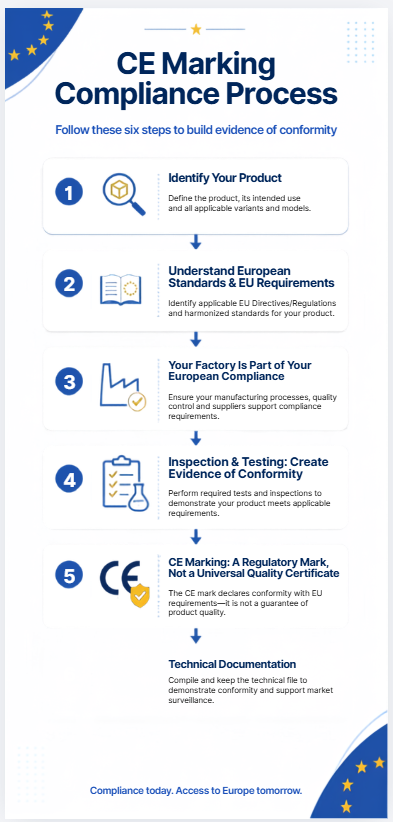
Identify Your Product and Applicable European Requirements
First, figure out what product you have and what it needs to do.Then decide which certification, check, or approval process is needed.
If you are selling products outside of the EU, here are some examples:
– Structural steel parts
– Made steel structures
– Steel sheets and shapes
– Pressure equipment and containers
– Industrial machines
– Railway parts
– Welded parts
You need to start by understanding what the product is meant for, because there isn’t one single European certification that works for all steel products.
Which rules apply depends on the product type, what it’s used for, its technical details, what the customer wants, the EU laws that apply, and the relevant standards or the Certification Route.
How to Determine the Right Certification Route
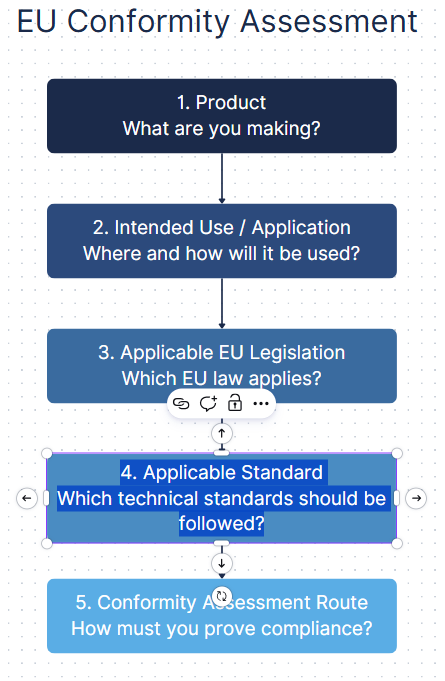
Understand the European Standards Relevant to Your Product
Depending on the product, a manufacturer might have to handle multiple requirements at the same time.Some common standards, rules, regulations, and guidelines that are often followed in the steel, fabrication, and engineering industries include:
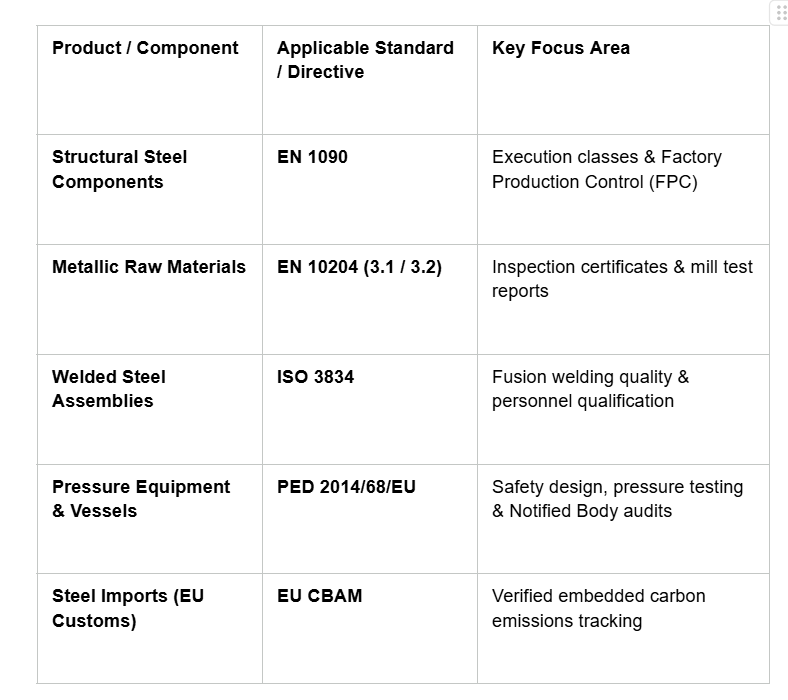
EN 1090
EN 1090 applies to the making of structural steel and aluminium buildings in the areas it covers and follows its rules for meeting standards.
For Indian steel makers who want to work on projects in Europe, knowing about EN 1090, including its different levels of work quality, how factories control their production, and how products are checked for compliance, is a key part of getting ready for the European market.
But EN 1090 isn’t something that applies to every steel product sent to Europe.
It depends on what the product is and what it’s meant to be used for.
EN 10204 Type 3.2
EN 10204 outlines the different types of inspection documents used for metal products.
Based on the product’s specifications, relevant standards, and any agreements in place, European customers might ask for certain inspection documents, such as:
- EN 10204 Type 3.1
- EN 10204 Type 3.2
The exact type of inspection document needed depends on the product itself and the specific contractual or legal requirements that apply.
EN ISO 3834
ISO 3834 sets out the quality standards for welding metal together using fusion welding methods.
For companies that make welded steel structures, pressure vessels, or other welded parts, ISO 3834 offers a clear way to manage and control the quality of their welding work.
Depending on the specific use, this standard may include steps like:
– Setting up proper welding methods
– Making sure welders are properly trained and qualified
– Managing the overall welding process
– Keeping track of materials used
– Checking and testing welds
– Handling any issues that don’t meet quality standards
– Keeping records of all welding activities
PED 2014/68/EU
The Pressure Equipment Directive (PED) covers pressure equipment and assemblies that are included in its rules.
Indian companies making pressure equipment to sell in Europe should check:
- If their product is covered by the PED
- How it is classified
- Which conformity assessment process applies
- If a third-party check is needed
- If a Notified Body must be involved.
EU CBAM
The European Union’s Carbon Border Adjustment Mechanism (EU CBAM) deals with carbon emissions that are part of the production of certain products that are brought into the EU.
Whether a product is affected by CBAM depends on what it is and how it is classified under customs rules.
Therefore, the best way to handle this is to check if a product is covered by CBAM before making it and sending it overseas.Here’s how to do it:
1.Identify the product
2.Check its customs classification
3.See if it falls under CBAM
4.Understand how it is made
5.Gather information on energy use and emissions
6.Keep records to support all this information
For more details on CBAM, including how it affects Indian businesses, which industries are involved, and how to prepare, read our full guide:
EU CBAM Explained: Impact on Indian Manufacturers, Exporters and Industries – Complete Guide 2026 – One of our blogs
Note: These steps are not the same as each other.
Your Factory Is Part of Your European Compliance
Let’s look at the main question:
Can your manufacturing process reliably make a product that meets the required standards?
Depending on the rules, customers, or approval processes, the European market wants proof that your production is controlled and can be repeated consistently.
This might include:
– Planning how to make the product
– Checking the quality of the product
– Testing and inspecting the product
– Managing suppliers and their materials
– Identifying the materials used
– Tracing each material back to its source
– Making sure equipment is properly calibrated
– Handling any issues with the product
– Having trained and qualified workers
– Checking the quality of welding
– Keeping proper records and documents
– Keeping detailed records of production
That’s why EU compliance for Indian manufacturers should be part of the production process from the start, not just something done at the end.
Inspection and Testing: Create Evidence of Conformity
For Indian manufacturers sending products to Europe, having clear proof that a product meets the required standards is just as important as the product itself.It’s not just a final check.This proof gives a clear and traceable way to show that the product is compliant and helps choose the right process for checking compliance:
Requirements → Inspection → Results → Records → Product
Depending on the product, this may involve:
– Looking at the product’s appearance and size
– Testing its strength and performance
– Checking the materials used
– Testing without damaging the product (non-destructive testing)
– Testing the product itself
– Checking welding methods and qualifications for welders
– Controlling the production process in the factory
CE Marking: A Regulatory Mark, Not a Universal Quality Certificate
There are a lot of misunderstandings about CE Marking.But it’s important to know that CE marking only applies to certain products that are covered by EU laws that require it.
CE marking is not:
– A general quality guarantee
– A certificate that allows exporting products to Europe
– Proof that a company is ISO 9001 certified
– Automatically needed for every steel product
– A substitute for the specific conformity checks required for each product
Before deciding if you need CE marking, a manufacturer should check:
– Does my product fall under any EU laws that require CE marking?
– Which EU law applies to my product?
– Which standard or technical specification applies to my product?
– What process do I need to follow for conformity assessment?
– Do I need an independent assessment or a Notified Body?
It can get complicated, but let’s make it simple with an example:
Imagine an Indian company that makes structural steel parts for a building in Germany.
They can’t just decide on their own if they need a CE mark—they need to go through the right process.
The process goes like this: you first figure out what your product needs, then you prepare the technical documents, and only then can you apply for CE marking if it’s required by EU law.
So, the idea is: you don’t get CE marking first, then figure out what your product needs.
You figure out your product’s requirements first—and if the law says you need CE marking, then you can get it.
Read our blog post: “CE Marking vs EN 1090” for more details.
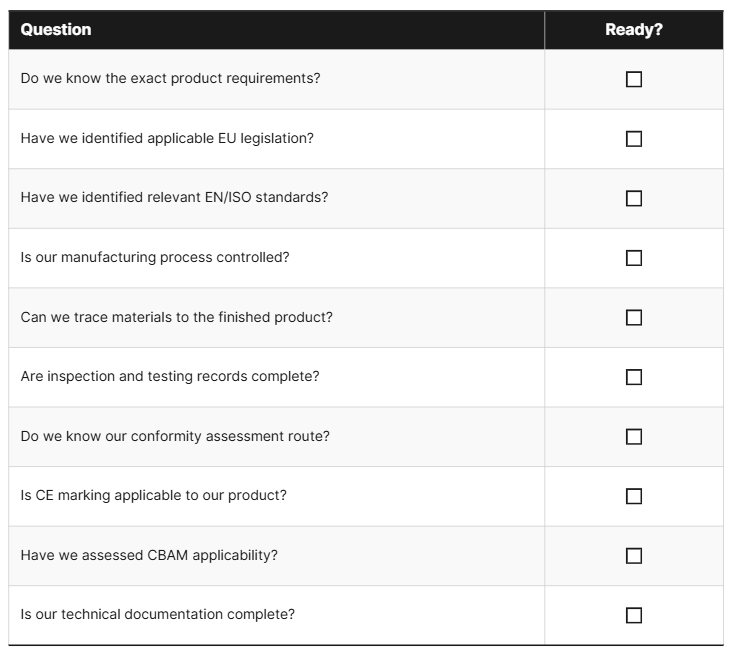
10-Point European Market Readiness Checklist for Indian Manufacturers
Before accepting your next European order, ask:
Frequently Asked Questions
What should an Indian manufacturer do before exporting a steel or engineering product to Europe?
Before production or shipment, manufacturers should identify the applicable EU requirements, determine relevant standards, assess factory controls, establish material traceability, plan inspection and testing, determine the conformity assessment route and prepare the required technical documentation.
If you are unsure where to begin, we can assess your requirements and identify the appropriate path toward European market readiness. https://pzvar.in
What are the main EU import requirements for Indian steel manufacturers?
The requirements depend on the product, its customs classification, destination country and applicable EU rules. Manufacturers should check product-specific requirements, customs procedures, applicable duties, origin rules and the documents required before shipment.
What export documents for Europe should an Indian steel manufacturer prepare?
Common documents can include the commercial invoice, packing list, certificate of origin, transport documents, customs information and product-specific documents. The exact set depends on the product and the terms agreed with the European buyer.
Do Indian manufacturers need to check customs requirements before shipping steel to Europe?
Yes. Customs classification and import procedures should be reviewed before shipment because they can affect duties, documentation and clearance. Product-specific requirements may also vary depending on the destination country.
Can an Indian manufacturer ship directly to any European country using the same paperwork?
Not always. Many customs rules are harmonised across the EU, but some country-level procedures and requirements can differ. The exporter should verify the requirements for the specific EU destination before shipping.
What should manufacturers verify before accepting a European steel order?
Manufacturers should confirm the product specifications, buyer requirements, applicable regulations, customs classification, required documents and any product-specific obligations before production and shipment. Early verification can reduce customs delays and documentation problems.
Related Sources
- EU CBAM Explained: Impact on Indian Manufacturers, Exporters and Industries – Complete Guide 2026
- CE Marking vs EN 1090: Key Differences Every Manufacturer and Exporter Should Know (2026 Guide)
- EN 10025-1: Technical Delivery Conditions for Hot Rolled Structural Steel Products – Complete Guide
- EN 1090 Certification Requirements: 15-Point Checklist Before Your Certification Audit
Expert Insight: European Market Readiness Is More Than Certification
The process of getting a product from an Indian factory to the European market doesn’t start at a port — it starts in the factory with important questions:
Can we show that what we make meets the needs of the market we want to enter?
What are the specific requirements?
Which standards are important?
Is CE marking needed?
Do we need a third-party check?
Can your factory show that production is well-controlled, products can be traced, and everything meets the required standards?
At FirstWelding Certification PvtLtd (Prvá Zváračská,a.s.), we help manufacturers figure out what certifications are needed based on the product, its purpose, and the target market.
Our goal isn’t just to get a certificate — it’s to find the right certification path, understand what needs to be shown, and create a clear plan to prepare for the European market.
Don’t wait until your product is packed for shipping to find out there are compliance issues.
If your product needs certification, inspection, assessment, verification, or conformity testing for the European market, contact First Welding Certification Pvt Ltd (Prvá Zváračská,a.s.) to talk about your needs and get a quote.