ISO 9001
DOCUMENTATION
MANUFACTURING
How Does Documented Information Help With ISO 9001 Certification for Manufacturing Companies?
By First Welding Certification Technical Editorial Team
08 Min Read
17 Sep 2026
Table Of Contents
- What Is Documented Information in ISO 9001?
- Why Is Documented Information Important for ISO 9001 Certification?
- Documented Information vs. Records
- How Should Companies Control ISO 9001 Documentation?
- Common Documentation Gaps During ISO 9001 Audits
- How Can Companies Maintain Effective Documented Information?
- Frequently Asked Questions
- Conclusion
ISO 9001 Documented Information
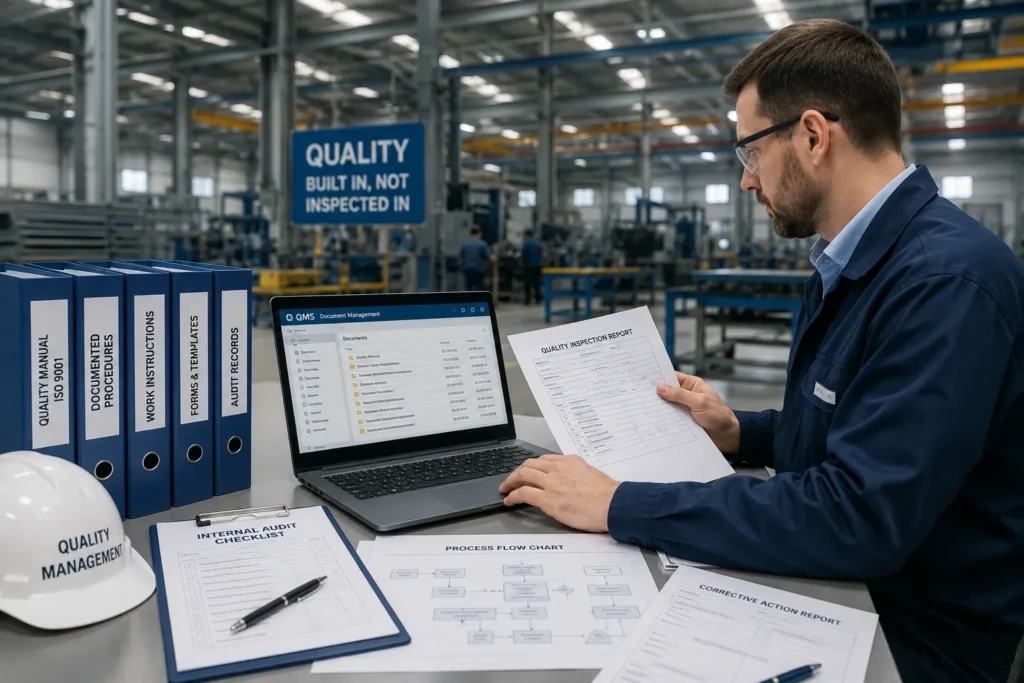
ISO 9001 documented information includes the documents and records an organization needs to control and maintain its Quality Management System (QMS). It establishes process consistency, traceability, and objective evidence of conformity during certification audits.
Documents
- Procedures
- Policies
- Work instructions
Records
- Inspection
- Training
- Audit records
Control
- Revision
- Access
- Retention & protection
Introduction
For manufacturing companies, maintaining consistent quality requires more than following production procedures. Organizations need clear evidence that their Quality Management System (QMS) is implemented, monitored, and maintained effectively. This is where ISO 9001 documented information becomes important.
Under ISO 9001, documented information enables organizations to establish, maintain, and demonstrate the effectiveness of their quality management processes. Proper documentation also gives auditors objective evidence during an ISO 9001 certification audit.
What Is Documented Information in ISO 9001?
Documented information in ISO 9001 refers to information that an organization needs to control and maintain to operate its QMS effectively and demonstrate conformity with ISO 9001 requirements.
The standard uses the term “documented information” instead of treating documents and records as completely separate categories.
It can include:
- Quality policies and objectives
- Procedures and work instructions
- Process-related information
- Inspection and testing records
- Training and competence records
- Supplier evaluation records
- Internal audit records
- Corrective action records
- Equipment and measurement records
- Management review records
The exact documentation required depends on the organization’s size, processes, products, risks, and operational complexity.
Why Is Documented Information Important for ISO 9001 Certification?
Effective ISO 9001 documentation creates consistency across business processes. Employees can understand what needs to be done, while management can monitor whether processes are achieving their intended results.
For manufacturing organizations, documented information can establish traceability across activities such as purchasing, production, inspection, testing, and delivery.
It can also demonstrate that required processes have been implemented and that relevant results have been recorded.
During an ISO 9001 certification audit, auditors may review documented information as objective evidence of conformity. Missing, outdated, or poorly controlled information can create difficulties when demonstrating how the QMS operates.
Documented Information vs. Records
A useful distinction within the ISO 9001 quality management system is between information that describes how a process should operate and information that demonstrates what actually happened.
For example:
Documents may include:
- Procedures
- Work instructions
- Process criteria
- Quality policies
Records may include:
- Inspection results
- Training records
- Audit findings
- Supplier evaluation results
- Corrective action records
Both categories need appropriate controls to ensure that the information remains available, accurate, and protected from unintended changes.
How Should Companies Control ISO 9001 Documentation?
Organizations should establish suitable controls for their ISO 9001 documented information based on operational requirements.
Key controls can include:
- Identifying documents clearly
- Controlling revisions and changes
- Preventing unintended use of obsolete information
- Ensuring information is available where required
- Protecting confidential or sensitive information
- Maintaining appropriate retention periods
- Controlling access to electronic and physical records
Digital QMS platforms can also be used to manage document versions, approvals, access permissions, and retention.
Common Documentation Gaps During ISO 9001 Audits
Manufacturing companies may encounter documentation-related issues when:
- Procedures do not match actual operations
- Records are incomplete or missing
- Obsolete documents remain in use
- Document revisions are not properly controlled
- Responsibilities are unclear
- Records cannot be easily retrieved
- Corrective actions are not adequately documented
Regular internal reviews can identify these gaps before the certification audit.
How Can Companies Maintain Effective Documented Information?
Maintaining documentation should not become a paperwork exercise. Organizations should focus on information that adds value to their QMS and supports effective process control.
A practical approach includes:
- Identify processes requiring documented information.
- Define who creates, reviews, approves, and updates it.
- Establish document control and revision procedures.
- Maintain records that demonstrate process results.
- Review documentation periodically.
- Remove or control obsolete information.
- Train relevant personnel on applicable procedures and instructions.
This approach can make the ISO 9001 documentation system easier to manage while improving consistency and traceability.
Frequently Asked Questions
What is documented information in ISO 9001?
It is information that an organization needs to control and maintain to operate its QMS and demonstrate conformity with applicable ISO 9001 requirements.
What are examples of ISO 9001 documented information?
Examples include quality policies, procedures, work instructions, inspection records, training records, audit records, corrective action records, and management review information.
How does documentation support an ISO 9001 audit?
Controlled documentation and records can serve as objective evidence that relevant processes are implemented and that the organization meets applicable QMS requirements.
Is documented information mandatory for ISO 9001 certification?
Yes. ISO 9001 requires documented information in specific areas, while organizations also determine additional documentation necessary for effective QMS operation.
Does every company need the same ISO 9001 documentation?
No. The extent of documented information can vary according to the organization’s size, processes, complexity, products, and operational risks.
Conclusion
ISO 9001 documented information plays an important role in demonstrating how an organization’s QMS is planned, implemented, monitored, and improved. For manufacturing companies, properly controlled documents and records can create greater process consistency, traceability, and audit readiness.
Organizations seeking ISO 9001 certification should therefore ensure that documented information reflects their actual processes and is appropriately controlled throughout its lifecycle.
Related Searches
Build a structured and audit-ready Quality Management System with First Welding Certification Pvt Ltd (PRVÁ ZVÁRAČSKÁ, a.s.). Get expert guidance on ISO 9001 certification, documented information, QMS requirements, and audit preparation.
Get in touch with us to discuss your ISO 9001 certification requirements.