
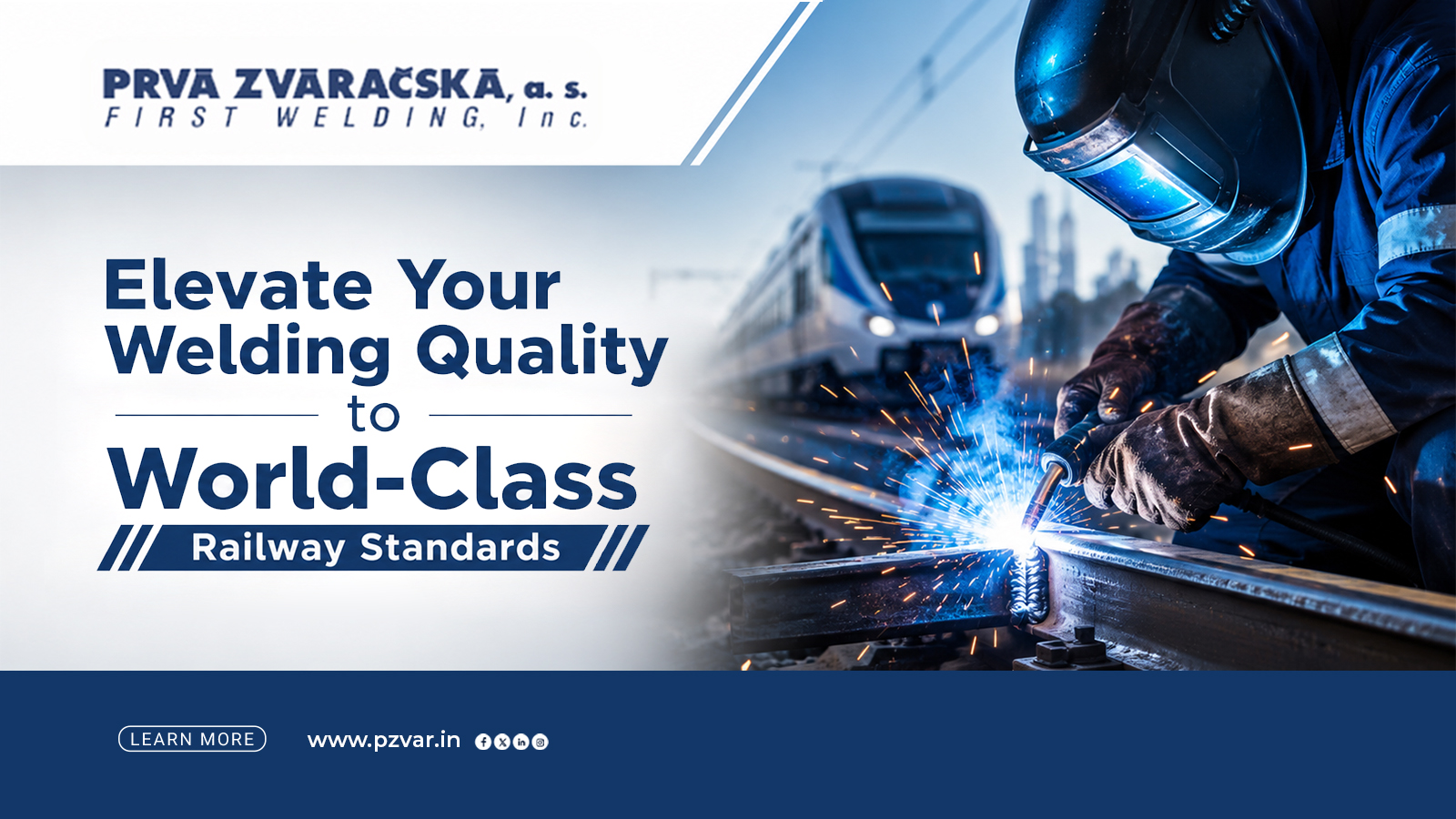
Unlocking Global Rail Markets: How EN 15085-2 Certification Elevates Your Fabrication Quality
The global railway industry moves at an incredible speed, driven by urban expansion and a massive shift toward sustainable transit infrastructure. However, operating within this space demands an uncompromising commitment to structural integrity. In rail transit, a single weld failure on a high-speed bogie or passenger coach chassis can lead to catastrophic consequences.
To systematically eliminate these structural risks and standardize production, the European Committee for Welding of Railway Vehicles established the EN 15085 2 standard. For metal fabricators, rolling stock component suppliers, and maintenance facilities, achieving this accreditation is no longer just an optional competitive advantage—it is a mandatory ticket to entering high-value international supply chains.
Understanding EN 15085 2: The Core of Railway Welding Standards
The EN 15085 standard series governs the entire lifecycle of welded railway vehicles, components, and assemblies. Specifically, EN 15085 2 focuses on the quality requirements and the certification of welding manufacturers. It bridges the gap between general manufacturing quality management and the highly specialized requirements of rail transit engineering.
Rather than looking at a finished product in isolation, the standard evaluates your entire production framework. It looks closely at your personnel qualifications, technical equipment, Welding Procedure Specifications (WPS), and quality assurance workflows.
The Three Classification Levels (CL)
Not all railway components carry the same level of risk. Therefore, the standard divides production into distinct Classification Levels based on the component’s safety relevance:
- CL 1 (Highest Safety Level): Applied to critical structural parts where failure immediately endangers human life or causes derailments. Examples include bogies, underframes, locomotive chassis, draw gears, and passenger safety structures.
- CL 2 (Medium Safety Level): Covers components with moderate safety importance. This includes internal support structures, brake pipe mountings, roof assemblies, and window frames.
- CL 3 (Low Safety Level): Applies to simple, non-critical weld-on parts that do not directly impact operational safety, such as toolboxes, internal steps, or decorative trim fixtures.
Why Choose PRVÁ ZVÁRAČSKÁ, a. s. for the EN 15085 2 Process?
Navigating the stringent requirements of the railway sector requires a certification body that balances deep technical knowledge with recognized legal authority. PRVÁ ZVÁRAČSKÁ, a. s. (First Welding Company Inc.) stands out as a premier global partner for manufacturers seeking compliance.
1. Recognized MCB Status under ECWRV
PRVÁ ZVÁRAČSKÁ, a. s. is an accredited and recognized Manufacturer Certification Body (MCB) under the European Committee for Welding of Railway Vehicles (ECWRV), holding Identification No. FCW/OREN15085-15/2015. This status means your certificates carry genuine weight across international borders, enabling seamless entry into European and global tenders.
2. Immediate Global Visibility in the Online Register
When you successfully pass your audit with PRVÁ ZVÁRAČSKÁ, a. s., your company’s certified status is automatically updated in the official, publicly accessible online database at en15085.joincert.eu. Procurement managers from Tier-1 rail operators use this database daily to source certified fabrication partners.
3. Integrated Auditing Excellence
The technical team at PRVÁ ZVÁRAČSKÁ, a. s. excels at combining evaluations. Because EN 15085 2 builds heavily upon the core principles of ISO 3834 (Quality requirements for fusion welding of metallic materials), our experienced auditors can evaluate both frameworks concurrently. This integration significantly minimizes production downtime and eliminates redundant paperwork for your team.
The Step-by-Step Path to Compliance
Achieving certification is a journey of operational refinement. When working with an accredited body, the certification process generally follows a highly coordinated path:
1.Application & Scope Definition:Phase 1.
Define your desired Classification Level (CL 1 to CL 3), the specific welding processes used (MIG, TIG, Laser, etc.), and the range of base materials your shop handles.
2.Comprehensive Documentation Review:Phase 2.
Submit all essential welding documentation. Auditors review your Welding Procedure Specifications (WPS), Welder Performance Qualifications (WPQ), and the technical competencies of your appointed Welding Coordinators according to EN ISO 14731.
3.On-Site Production Audit:Phase 3.
Auditors conduct an on-site inspection of your shop floor. We verify your material storage, evaluate gas mixing setups, check for proper separation of ferrous and non-ferrous materials, and observe live welding operations along with mock-up testing.
4.Certification & Registration:Phase 4.
Upon addressing any findings, your official conformity certificate is issued. Your company profile is then published directly to the public ECWRV registry, unlocking your access to global rail tenders.
Technical Advantages: How the Standard Upgrades Your Shop
Implementing this framework does much more than open up new marketing channels. It fundamentally upgrades the engineering and operational capabilities of your shop floor.
- Enforces Material Traceability: Under the standard, material tracking becomes absolute. For CL 1 and CL 2 components, you must maintain a clear link between the EN 10204 Type 3.1 inspection certificate, the specific plate or sheet metal, and the exact filler metals used.
- Standardizes the Welding Environment: It mandates strict control over environmental variables, such as keeping specialized materials segregated to prevent cross-contamination, ensuring precise pre-heating procedures, and calibrating welding power sources regularly.
- Establishes Clear Accountability: By requiring a qualified Responsible Welding Coordinator (RWC), your facility gains an engineering anchor who oversees design reviews, structural risk assessments, and final quality control checks.
Accelerate Your Global Railway Tenders Today: Don’t let compliance gaps restrict your market potential or cause you to miss high-value international rail contracts. Contact the international industrial certification division at PRVÁ ZVÁRAČSKÁ, a. s. today to schedule your pre-assessment check, coordinate an on-site audit timeline, and establish an unshakeable standard of welding excellence for your organization.
SEO Ranking FAQ: Critical Insights on EN 15085 2
Q1: What is the primary purpose of the EN 15085 2 standard in rail manufacturing?
The primary purpose is to establish uniform quality guidelines and certification protocols for companies involved in the welding fabrication and maintenance of railway vehicles and components. It ensures that every welded joint possesses the mechanical properties necessary to withstand extreme dynamic stress over decades of operational service.
Q2: Is EN 15085 2 certification required for contract manufacturing and component assembly?
Yes. If you manufacture, weld, design, assemble, or supply components intended for rail vehicles, certification is almost always a baseline contractual requirement. Even if you are a subcontract fabricator providing components to a Tier-1 prime contractor, you must prove compliance matching the safety level of the parts you produce.
Q3: How long remains an EN 15085 2 certificate valid before expiration?
An official certificate is valid for a maximum period of 3 years. To maintain valid standing, the manufacturer must successfully undergo annual surveillance audits. These annual checks ensure that personnel qualifications remain up to date and that your shop floor continues to execute processes with consistent quality.
Q4: What is the relationship between ISO 3834 and the EN 15085 2 framework?
The railway standard builds directly upon the quality system requirements of ISO 3834. While you do not need to hold a separate, standalone ISO 3834 certificate, your internal quality system must meet its technical guidelines to qualify for railway certification.
Q5: Can external consulting welding coordinators be recognized during the audit?
Yes, under specific conditions outlined by the guidelines. External or sole-trader welding coordinators can be recognized as the responsible authority for a facility, provided we fully demonstrate the required technical knowledge under EN ISO 14731 and maintain a clear, contractually defined presence on the shop floor during production.