
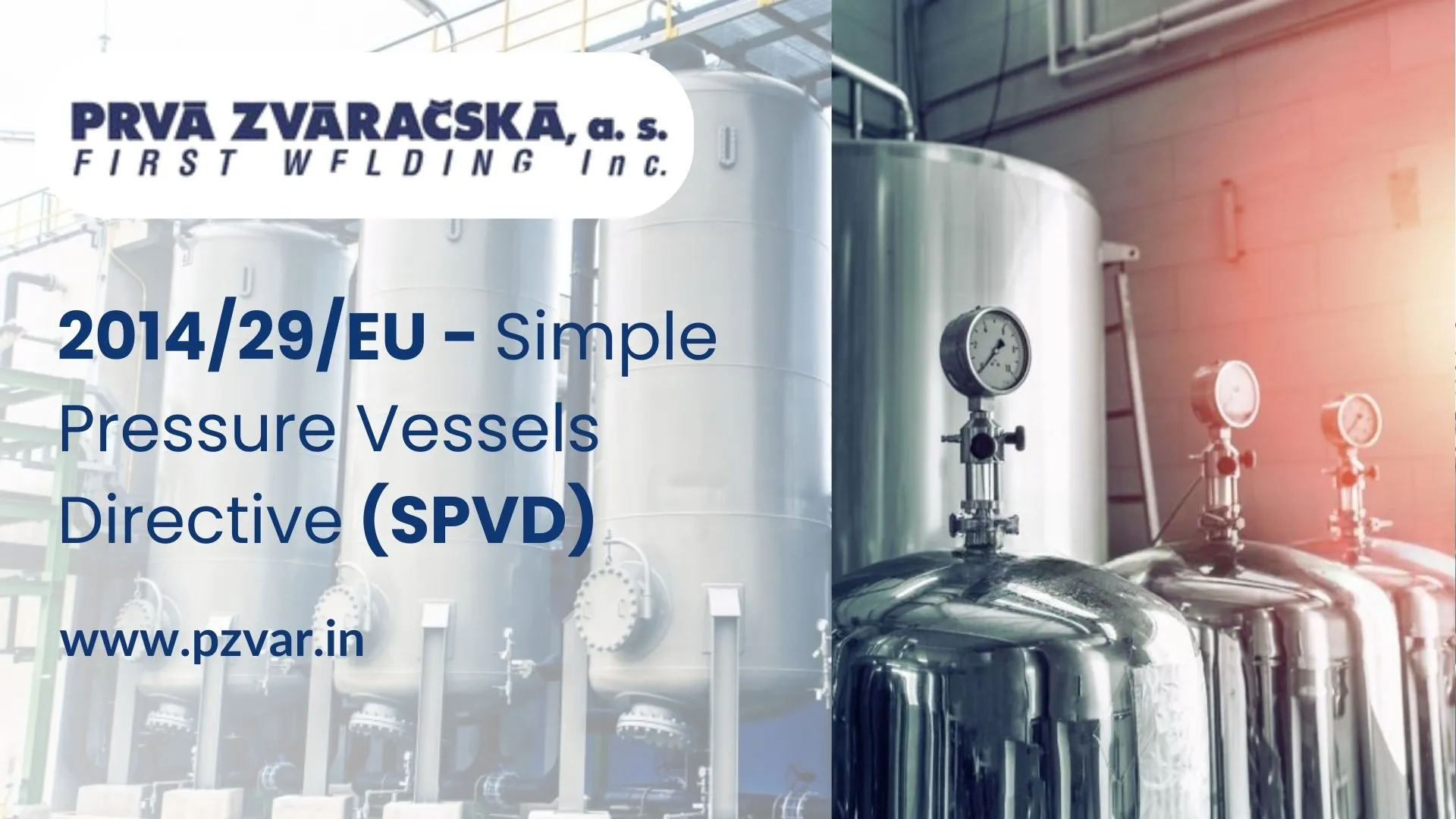
SPVD Certification in India | Simple Pressure Vessel Compliance | PRVÁ ZVÁRAČSKÁ, a. s.
Manufacturers producing pressure vessels for the European market must comply with strict safety regulations established by the European Union. One of the key regulatory frameworks governing this equipment is the Simple Pressure Vessels Directive 2014/29/EU, which applies to simple welded pressure vessels designed to contain compressed air or nitrogen.
SPVD Certification ensures that these pressure vessels meet essential safety, design, and manufacturing requirements before they are placed on the European market. To obtain certification and CE marking, manufacturers often work with an authorized Notified Body such as PRVÁ ZVÁRAČSKÁ, a. s. (Notified Body 2408) to complete the conformity assessment process.
What is SPVD Certification?
SPVD Certification refers to compliance with the Simple Pressure Vessels Directive 2014/29/EU, a European Union regulation that applies to simple pressure vessels manufactured in series.
These vessels are typically used to store compressed air or nitrogen under pressure. Manufacturers who intend to sell pressure vessels within the European Union must ensure that their products comply with the directive and meet all required safety and design standards.
Compliance with SPVD allows manufacturers to apply the CE marking, confirming that the product meets European safety regulations and can be legally sold within the EU market.
What is the Simple Pressure Vessels Directive?
The Simple Pressure Vessels Directive (2014/29/EU) regulates the design, manufacturing, and conformity assessment of simple welded pressure vessels.
The directive applies to vessels that:
- Are welded vessels
- Contain air or nitrogen
- Have an internal pressure greater than 0.5 bar
- Are manufactured in series production
These regulations ensure that pressure vessels meet strict safety standards before they are placed on the European market.
Products Covered Under SPVD Certification
SPVD Certification typically applies to equipment such as:
- Air receiver tanks
- Compressed air storage vessels
- Industrial air pressure tanks
- Nitrogen storage vessels
- Air compressor vessels
These pressure vessels are commonly used in industries such as:
- Manufacturing plants
- Automotive workshops
- Energy and power plants
- Industrial machinery systems
Role of a Notified Body in SPVD Certification
For certain categories of pressure vessels, manufacturers must work with an EU-designated Notified Body to complete the conformity assessment process.
A recognized organization such as PRVÁ ZVÁRAČSKÁ, a. s. (Notified Body 2408) is authorized to perform certification and inspection activities related to SPVD compliance.
As an EU Notified Body, the organization provides independent verification to ensure that pressure vessels meet the safety and technical requirements defined by the directive.
Services typically include:
- Design examination and technical documentation review
- Verification of manufacturing procedures
- Welding procedure qualification
- Welder qualification verification
- Inspection and testing of pressure vessels
- Certification required for CE marking
These activities help ensure that the pressure vessels meet all necessary safety and quality requirements before entering the European market.
SPVD Certification Process
The certification process usually includes several technical evaluation steps.
1. Product Classification
The pressure vessel is classified based on pressure and volume limits defined in the directive.
2. Design Review
Engineering drawings, design calculations, and technical documentation are evaluated to confirm compliance with SPVD safety requirements.
3. Material Verification
Material certificates are reviewed to ensure that the materials used in the vessel meet relevant European standards
4. Welding Qualification
Since SPVD vessels are welded structures, welding procedures and welder qualifications must be verified to ensure safe manufacturing.
5. Inspection and Testing
Testing may include:
- Visual inspection
- Pressure testing
- Leak testing
- Non-destructive testing (NDT)
NDT personnel are typically qualified according to ISO 9712 standards.
6. Certification and CE Marking
After successful evaluation, certification is issued and the manufacturer can apply the CE marking to the pressure vessel.
Benefits of SPVD Certification
Obtaining SPVD Certification provides several advantages for manufacturers:
- Legal access to the European market
- Compliance with EU safety regulations
- Authorization to apply CE marking
- Improved product reliability and safety
- Increased confidence from international customers
- Competitive advantage in global markets
Manufacturers exporting pressure vessels to Europe must ensure compliance with SPVD requirements to avoid regulatory restrictions.
SPVD Certification for International Manufacturers
Manufacturers from countries such as:
- India
- China
- United States
- Turkey
- Middle East countries
can obtain SPVD certification through an approved EU Notified Body such as PRVÁ ZVÁRAČSKÁ, a. s. (Notified Body 2408).
Working with an experienced certification body helps manufacturers complete the conformity assessment process efficiently and obtain CE marking for their pressure vessels.
Conclusion
SPVD Certification plays a vital role in ensuring that simple pressure vessels meet strict European safety and quality standards.
Compliance with the Simple Pressure Vessels Directive 2014/29/EU allows manufacturers to apply CE marking and legally sell their products within the European Union.
By working with an authorized Notified Body such as PRVÁ ZVÁRAČSKÁ, a. s. (Notified Body 2408), manufacturers can complete the certification process efficiently and ensure their pressure vessels meet the required technical and regulatory standards for the European market.
Frequently Asked Questions (FAQs)
1. What is the difference between PED and SPVD certification?
SPVD certification applies to simple welded pressure vessels containing air or nitrogen, while Pressure Equipment Directive 2014/68/EU covers a wider range of pressure equipment such as boilers, pressure vessels, piping, and pressure accessories.
2. What is the maximum pressure allowed under SPVD?
Under the Simple Pressure Vessels Directive 2014/29/EU, SPVD typically applies to vessels with an internal pressure greater than 0.5 bar, depending on pressure and volume limits defined by the directive.
3. Is CE marking mandatory for simple pressure vessels?
Yes. Pressure vessels covered by the Simple Pressure Vessels Directive 2014/29/EU must carry CE marking before they can be sold or used within the European Union.
4. How long is SPVD Certification valid?
SPVD certification generally remains valid as long as the manufacturer maintains compliance with the directive and the approved manufacturing process is not significantly changed.
5. What documents are required for SPVD Certification?
Typical documents include technical drawings, design calculations, material certificates, welding procedure qualifications, welder qualifications, and test reports.
6. Do manufacturers need qualified welders for SPVD vessels?
Yes. Since SPVD vessels are welded structures, welders must be qualified according to recognized standards to ensure safe and reliable welding.
7. Can SPVD-certified vessels be used outside the European Union?
Yes. Although SPVD certification is required for the EU market, many international buyers also accept SPVD-compliant vessels because they meet strict European safety standards.
8. Who can issue SPVD Certification?
Only EU-authorized Notified Bodies such as PRVÁ ZVÁRAČSKÁ, a. s. can perform conformity assessment and issue certification required for CE marking.