EN 15085
RAILWAY
CERTIFICATION
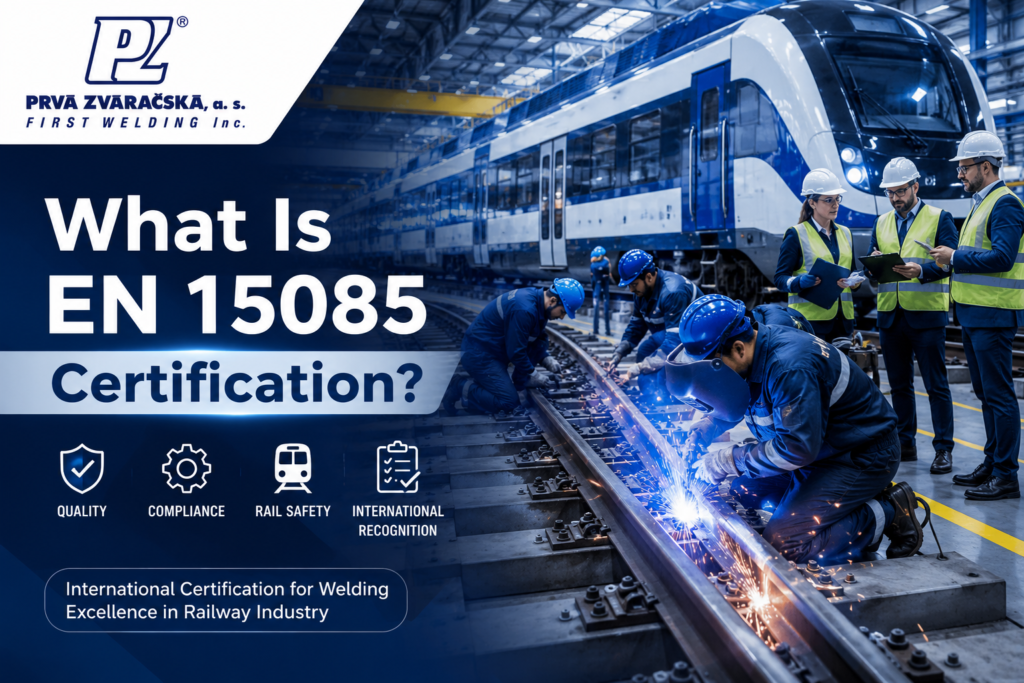
What Is EN 15085 Certification? The Railway Welding Standards
By First Welding Certification Technical Editorial Team
8 Min Read
25 July 2026
Table Of Contents
- Introduction
- What Is EN 15085 Certification?
- Brief History of EN 15085
- Why EN 15085 was introduced ?
- Who Needs EN 15085 Certification?
- Industries Using EN 15085
- Understanding EN 15085 Certification Levels
- Why Organisatioms Seek EN 15085 Certification?
- How Does EN 15085 Certification work?
- Why is EN 15085 Important?
- Conclusion
- Needs EN 15085 Certification
- Frequently Asked Questions
Key Takeaways
Certification begins with defining the correct scope.
Documentation is an essential part of the assessment.
Qualified personnel play an important role.
Assessments review processes, documentation & implementation.
Introduction:
If your company is making or fixing railway vehicles or welded railway parts, you probably already know about EN 15085 Certification.Most manufacturers come across this standard when they provide products to railway customers, especially in projects where it’s important to control welding quality.
But what does this standard actually mean?
Why is it needed, and who should follow it?
Here, you’ll find information about the standard and learn why it’s so important for railway manufacturing.
In the coming articles, we’ll take a closer look at EN 15085, discussing its requirements, the certification process, its benefits, and the different levels of certification.
What Is EN 15085 Certification?
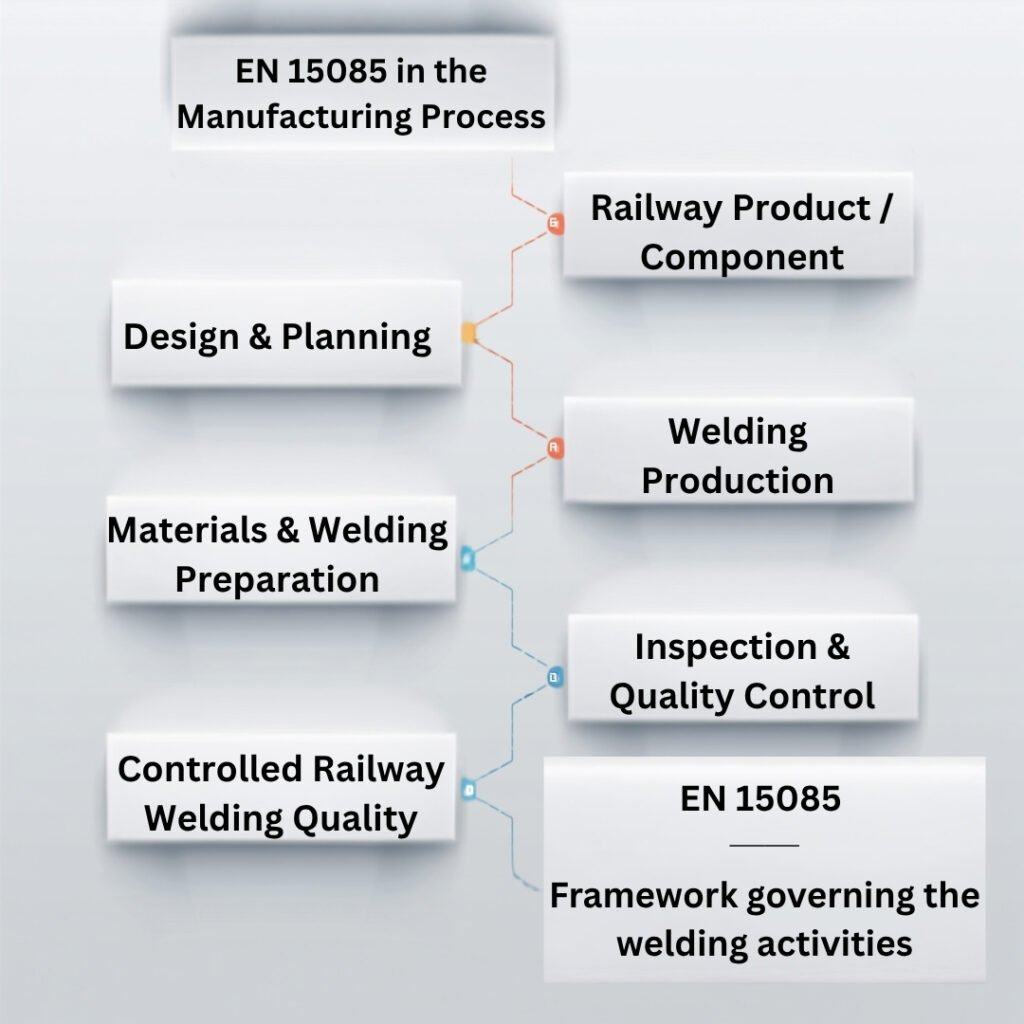
EN 15085 is an European Standard that sets quality standards for welding in railway vehicles and their parts.It provides a clear way to manage welding activities, covering areas like planning, production, checking, and keeping records.This standard helps companies show that their welding is done properly and meets the quality needs of the railway industry.Unlike other standards that only focus on the final result of welding, EN 15085 looks at the whole process of managing welding.
Learn more about our EN 15085 Certification.
Brief History of EN 15085
As railway manufacturing grew in different countries, companies faced many different welding methods and quality rules.To make welding more consistent across Europe, a standard was developed.This standard, called EN 15085, helped ensure that the quality of welding for railway vehicles and parts was the same everywhere.It allowed manufacturers and their customers to follow the same technical guidelines.Now, this standard is widely used throughout the railway industry.It’s followed by manufacturers making new trains and parts, as well as those doing certain kinds of repairs.
Why EN 15085 was Introduced?
Railway vehicles operate in a tough environment where safety, reliability, and good manufacturing are very important.This standard was created to help control the welding process at the manufacturer level in a standard way.It lets organizations set clear rules and responsibilities for making sure the welding is of good quality.It also helps organizations stay consistent when working on different projects that have established railway welding requirements.
Who Needs EN 15085 Certification?
EN 15085 certification is needed for companies that make or fix welded parts used in railways.
This certification is usually required by:
– Companies that build railway vehicles
– Companies that make railway parts
– Firms that create railway projects through welding
– Businesses that produce rolling stock
– Companies that maintain railway systems
– Firms that make welded structures used in railways
Whether a company builds whole railway vehicles or just certain welded parts, they may need EN 15085 certification depending on what they do and what the customer requires.
Industries Using EN 15085
EN 15085 can be used in these areas of the railway industry:
– Making passenger train cars
– Creating freight railway cars
– Building metro and light rail systems
– Producing railway parts
– Running railway repair shops
– Railway infrastructure projects that include welding
– The use of EN 15085 depends on the type of welded product and the project.
Understanding EN 15085 Certification Levels
Not every manufacturer uses the same welding method.Because of this, there are different EN 15085 levels based on how complex and important the welded product is.
This helps set the right quality standards for each welding process.
Read next: EN 15085 Certification Requirements
Why Organisations Seek EN 15085 Certification?
Organisations involved in railway vehicle and component manufacturing may need EN 15085 certification to demonstrate that their welding activities are properly controlled, qualified and traceable.
The certification covers important areas such as welding coordination, qualified personnel, approved WPS and WPQR, material traceability, inspection and production records.
For manufacturers working across different European requirements, EN 15085 can also work alongside other applicable welding and product standards.
EN ISO 3834 Certification useful where the organisation also needs to address broader welding quality requirements for metallic materials.
How Does EN 15085 Certification Work?
The process starts by defining what the manufacturer actually produces and what welding activities are covered.
A typical assessment looks at:
Scope → Classification → Welding Coordination → Personnel → WPS/WPQR → Materials → Production → Inspection & Records
The important point is that the manufacturer needs to demonstrate that these controls are implemented in actual production, not simply documented.
The applicable certification level depends on the railway products, welding activities and their significance.
EN 1090 Certification relevant for manufacturers working with structural steel and aluminium components where EN 1090 requirements apply.
Why Is EN 15085 Important?
In the railway industry, the quality of the welding work plays a big role in how dependable and well the products perform.
Using EN 15085 helps companies create a system that makes sure welding is done the same way every time, which meets the needed standards.
Since railway projects need a high level of manufacturing quality, it’s important to know about EN 15085.
Conclusion
EN 15085 certification provides a structured framework for controlling welding activities in railway vehicle and component manufacturing. It brings together welding coordination, qualified personnel, welding procedures, material traceability, production controls and inspection records within the defined certification scope.
For manufacturers, understanding the applicable requirements and certification level is an important step before entering railway projects where EN 15085 is required.
EN 15085 Certification for Railway Manufacturers
Is your organisation involved in manufacturing welded railway vehicles or railway components?
First Welding Certification Pvt Ltd (PRVÁ ZVÁRAČSKÁ, a.s.), provides EN 15085 Certification to understand the applicable certification scope, requirements and certification process for your organisation.
FAQs
What affects EN 15085 certification cost?
The EN 15085 certification cost depends on factors such as the certification scope, applicable certification level, production activities, number of locations and the assessment required. The final cost therefore varies from one manufacturer to another.
What should manufacturers consider when choosing EN 15085 certification bodies in India?
When comparing EN 15085 certification bodies in India, manufacturers should consider whether the body is recognized for the applicable certification scheme and whether its certification scope matches the manufacturer’s railway welding activities.
Does every railway manufacturer have the same certification requirements?
No. The applicable requirements depend on the products being manufactured, welding activities, certification scope and classification. A manufacturer should therefore determine its specific scope before starting the certification process.
Does EN 15085 certification apply to welded railway components?
Yes. EN 15085 can apply to manufacturers involved in welded railway vehicles and railway components. The applicable scope depends on the type of product and welding activities carried out by the organisation.
Does the certification cover only welding personnel?
No. Certification is not limited to personnel qualifications. It also considers the organisation’s welding coordination, procedures, materials, production controls, inspection and records within the defined certification scope.