
News Letter
EN 10204
Checklist
EN 10204 Certificate Rejection: 7 Red Flags Every Material Buyer Should Check
October 2026 Edition | Steel Trade & Compliance Update
Stay informed with the latest developments in international welding standards and certification requirements. This month’s update focuses on the current status of EN ISO 15614-1, one of the most important standards governing welding procedure qualification for metallic materials.
A small mistake in the documentation can lead to big delays in the project. Make sure your material test certificate is prepared and available for checking when you buy steel pipes, pressure vessel materials, or stainless steel. If the heat numbers are missing, the certificate type is wrong, or the test results are incomplete, it can cause delays in accepting the materials. This affects both the procurement and quality teams. Be aware of the 7 common errors found in EN 10204 certificates.
What Is an EN 10204 Certificate?
EN 10204 outlines the documents needed for inspecting metal products, which helps buyers confirm that the materials they receive match the details they ordered; the right certificate depends on what was ordered and the specific requirements.
| Certificate Type | What It Provides |
|---|---|
| 2.1 | Declaration of compliance with the order |
| 2.2 | Test report with results from non-specific inspection |
| 3.1 | Inspection certificate with specific inspection results and the required manufacturer's validation |
| 3.2 | Inspection certificate with specific inspection results and additional validation by the purchaser's authorized representative or an inspector designated by official regulations |
Buyer tip: When purchasing, make sure to state which certificate you need. Not all mill test certificates offer the same proof of inspection.
7 Red Flags to Check Before Accepting a Certificate
1.Wrong certificate type
The certificate provided does not fit the requirements from the purchase order.
What to do: Make sure you know which type—2.1, 2.2, 3.1, or 3.2—is needed before accepting the document.
2.Missing heat number traceability
The heat number on the certificate is missing or does not match the material markings.
What to do: Check that the heat number matches the material, certificate, and receiving records.
3.Incomplete chemical testing
The chemical composition results are missing or do not show that the material meets the required grade.
What to do: Compare the reported results with the material specification.
4.Missing mechanical test results
The certificate does not include required mechanical properties like tensile strength or impact results when needed.
What to do: Make sure all required tests and results are included.
5.Wrong material grade or standard
The certificate lists a different grade, standard, or specification than what was ordered.
What to do: Check the material details and purchase order before releasing the material.
6.Missing heat treatment records
There is no information or incomplete details about the heat treatment process.
What to do: Check the delivery condition and request the necessary supporting records if needed.
7.Inconsistent supplier or certificate details
There are mismatches or hard-to-verify details like manufacturer info, batch numbers, or signatures.
What to do: Reach out to the supplier or manufacturer to look into the differences and confirm the certificate is genuine.
Quick Comparison: What Should Material Buyers Check?
| Verification Point | What to Look For | Risk if Overlooked |
|---|---|---|
| Certificate type | Matches the purchase order | Document rejection |
| Material identification | Correct grade and product description | Material mismatch |
| Heat number | Matches material markings | Traceability gaps |
| Chemical testing | Required composition results | Unverified material compliance |
| Mechanical testing | Required property results | Incomplete inspection evidence |
| Supplier documentation | Consistent manufacturer and order details | Verification delays |
| Inspection validation | Meets the applicable certificate requirements | Material acceptance issues |
The inspection of steel pipes, piping materials, pressure vessel materials, and other applications that require meticulous material documentation can benefit from these checks.
How to Verify an EN 10204 Certificate
Use this simple process when reviewing incoming material documentation.
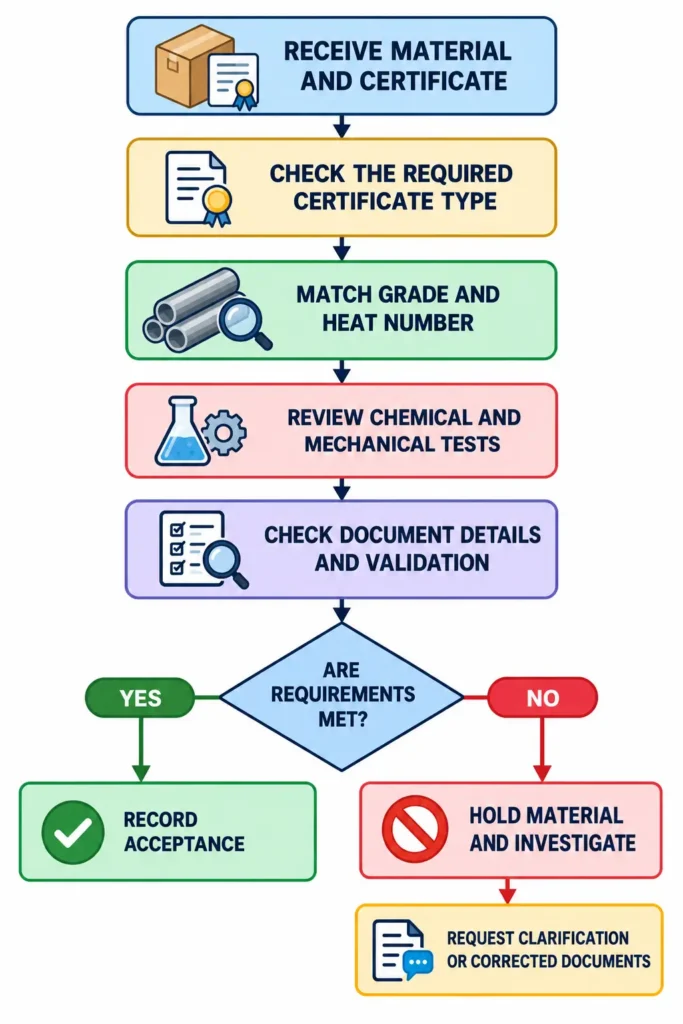
This is a standard process for screening. Follow the relevant purchase order, inspection plan, and material acceptance steps.
Why Early Certificate Verification Matters
Certificate verification isn’t just about filling out forms. It plays an important role in getting the right materials and making sure the quality is good.
Checking mill test certificates early can help your team in several ways:
- Minimize unnecessary rejections of materials and delays in inspections.
- Keep track of each batch of material throughout the production process.
- Spot missing or incomplete documents before work starts.
- Plan where inspections and witness points are needed.
- Make your supplier’s documentation and material approval process better.
For projects that involve pressure equipment, piping, and important steel parts, fixing any document problems early on can stop issues from coming up later.
Final Takeaway
A material test certificate should not be accepted just because it seems complete.
Check the certificate type, confirm the heat number, review the necessary test results, and look into any inconsistencies before approving the material.
Doing a few checks when receiving the material can avoid extra questions, delays, and more inspections later.
Need support with material inspection?
First Welding Certification Pvt. Ltd. offers inspection and certification services to help organizations. If your project needs material verification, third-party inspection, or help with inspection documentation, contact our team to talk about your needs.