
Engineering Compliance
Welding Standards
Global Certification Updates
India-EU Steel Export Quota 2026: What Indian Manufacturers Need to Know About EU Market Access
October 2026 Edition | Steel Trade & Compliance Update
Stay informed with the latest developments in international welding standards and certification requirements. This month’s update focuses on the current status of EN ISO 15614-1, one of the most important standards governing welding procedure qualification for metallic materials.
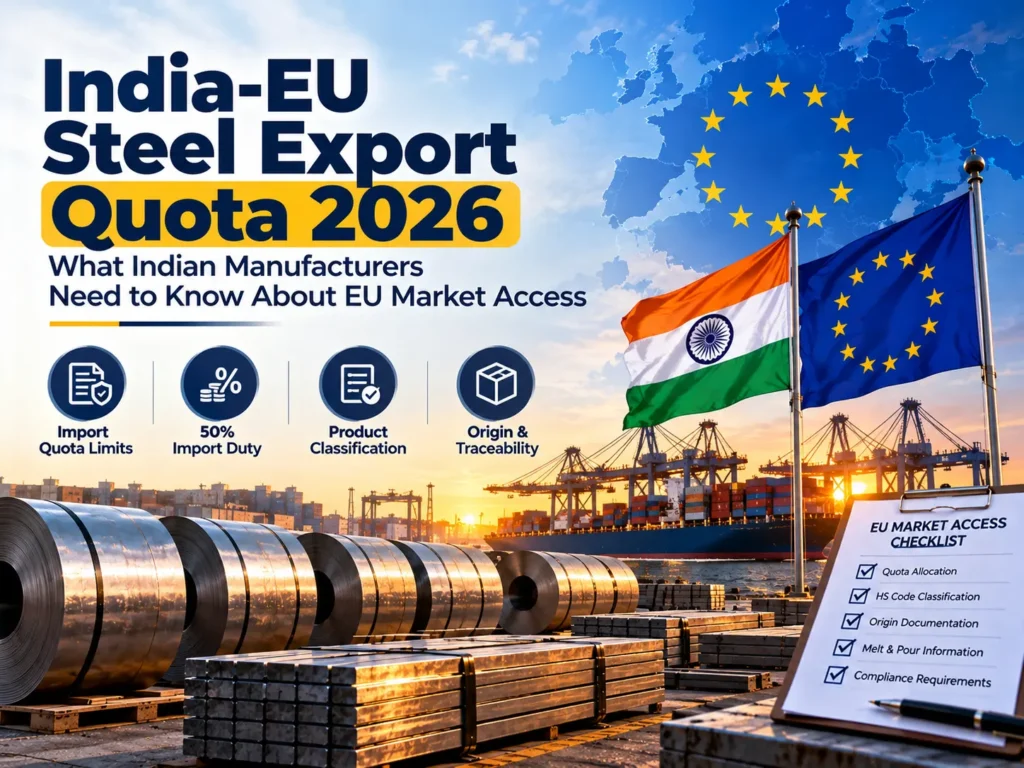
The European Union has launched a new system for importing steel starting from 1 July 2026, replacing its old steel safeguard measure. Under this new approach, duty-free steel imports are limited to 18.3 million tonnes each year, grouped by different product types. Any steel imports that go beyond this limit will face a 50% import duty.
For Indian steel makers and exporters, this change means that having enough quota, correctly classifying products, providing proper origin documents, and ensuring a clear supply chain will be even more crucial if they want to enter the EU market.
What Changed in 2026?
The EU has introduced a new steel policy to deal with too much steel being made worldwide and to help the European steel industry avoid losing business to other countries.
The plan includes:
• An annual limit of 18.3 million tonnes of steel that can be imported without paying extra fees
• Quotas that are set differently for each country and type of steel product
• A 50% tax on steel that doesn’t fall under the quota
• Changes in how steel from EU Free Trade Agreement (FTA) countries is treated compared to steel from non-FTA countries
• New rules requiring more information about where the steel is made and how it is produced
• A stronger focus on knowing where the steel comes from and how it is made
This policy applies to 30 types of steel products, but it does not include steel imports from countries in the European Economic Area (EEA).
Where Does India Stand?
India gets different amounts of steel products based on the type of steel.
For example, in the 2026 country-specific allocations, India was given about:
| Steel Category | India's Annual Allocation |
|---|---|
| Hot-rolled coil | 26,019 tonnes |
| Bars & light sections | 92,557 tonnes |
| Wire | 18,772 tonnes |
These numbers show that Indian exporters should look at each product type and the specific quota that applies to it, instead of just seeing the EU quota as a single overall limit.
Why Quota Matters for Indian Exporters
The biggest business concern is what happens when the allowed quota is fully used up.
Once the quota is filled, more imports might have to pay a 50% extra tax.
This can impact:
• How much exporters charge for their goods
• When they plan to send products
• Talks with buyers in Europe
• When orders are arranged
• When shipments are sent
• Profit levels and ability to compete
For companies that send goods to the EU, managing the quota is now a key part of planning how to enter the market.
Melt & Pour: A New Traceability Requirement
The 2026 EU steel rules also require information about the country where the steel was first melted and poured.
The goal is to make the supply chain more transparent and prevent steel from being processed in other countries to avoid rules.
Indian steel makers need to keep clear records connecting:
Steel type → Batch number → Where it was melted and poured → Material certificate → Processing steps → Inspection → Final product
This means having good traceability and proper paperwork is becoming more important for steel sent to the EU.
India-EU FTA: What About Steel?
In January 2026, India and the EU finalized talks on a big Free Trade Agreement. According to India’s Ministry of Commerce, this agreement offers special benefits on 97% of products, but some items like steel are handled differently through something called tariff-rate quotas (TRQs).
However, this agreement doesn’t mean that all Indian steel can be sold in the EU without any tariffs.
Exporters need to take into account several important factors:
– The specific TRQs for steel
– How each product is classified
– Rules about where the product comes from
– EU rules for steel
– Requirements for how steel is made and processed
– Obligations under the Carbon Border Adjustment Mechanism (CBAM)
– Any special rules that apply to certain products
So, when planning to sell steel to the EU, it’s important to look at both the EU’s steel import rules and the India-EU FTA together.
What Indian Steel Manufacturers Should Check Now
1.Find out which exact category of steel product your shipment fits under in the EU.
2.Look up the available quota for the relevant country or what’s left of the quota before finalizing your shipment plans.
3.Keep an eye on how much quota is left throughout the year, especially if you’re exporting a lot.
4.Keep clear records of the heat, batch, material certificates, and production details for your products.
5.Make sure you can provide accurate origin information with proper supporting documents.
6.Check the technical standards, compliance rules, and customer requirements that apply to your product in the EU.
7.Get ready for the EU’s Carbon Border Adjustment Mechanism, as iron and steel are included, making emissions data and carbon-related documents more important for trade with the EU.
What This Means for Exporters
The 2026 EU steel rules change how steel is brought into the European market.
Exporting steel to Europe is now more than just making steel that meets standards and is priced well.
Steel makers must also show:
– Eligibility for quotas
– Where the steel comes from
– How the steel was made and tracked
– If the steel meets requirements
– All necessary paperwork
– Information on carbon emissions
For Indian steel exporters, including these elements in their export process can help avoid problems with missing documents and make it easier to meet customer and government checks in Europe.
Key Takeaway
The EU’s 2026 steel import rules bring a more organized way to manage steel quotas, protect trade, and ensure supply chains are clear.
For Indian steel makers aiming to sell in Europe, the first step is to know the specific quotas for each product, keep an eye on available quotas, and keep full records showing where materials came from, how they were made, how they were tracked, and if they meet required standards.
The European steel market is still open, but getting in now requires being ready to follow the rules that control entry.