
SPVD
2014/28/EU
GUIDE
SPVD Certification: Complete Guide to the Simple Pressure Vessels Directive (2014/29/EU)
By Technical Editorial Team
7 Min Read
6 Aug 2026
Table Of Contents
- Introduction
- What is SPVD Certification?
- SPVD at a Glance
- Why SPVD Matters for Manufacturers
- Which Products Fall Under SPVD?
- Understanding the SPVD Compliance Journey.
- SPVD Compliance Journey
- Essential Safety Requirements of SPVD
- Design and Material Considerations
- Manufacturing and Welding
- Inspection and Pressure Testing
- Techical Documentation
- Conformity Assessment and CE Marking
- Common Challenges Manufacturers Face During SPVD Compliance
- Industries Applicable
- Export Readiness Checklist for Manufacturers
- Frequently Asked Questions
Key Takeaways
Qualified Welders
Verified Competence
Recognized Qualification
International Recognition
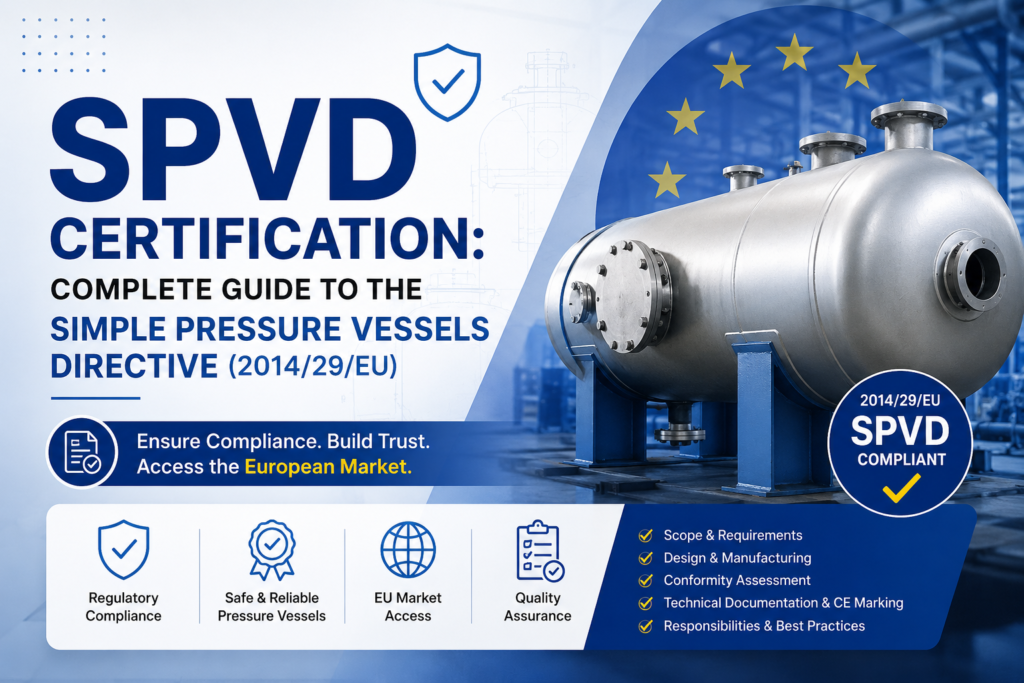
A Pressure Vessel Can Meet Every Specification and Still Be Rejected
The engineers in your company have completed the design. Production is all done. Welding has been finished, inspections have taken place, and the pressure vessel has passed all the required tests. Your shipment is ready and is waiting to be sent to a customer in Europe.
Everything looks good until you get an unexpected email.
“This product can’t be sold in Europe because it doesn’t follow the EU Directive.”
It’s important to understand that for many companies, this isn’t about quality—it’s about following the rules.
It’s possible to make a pressure vessel that meets all the technical standards, but there can still be delays if the right European laws weren’t considered during production.
Often, identifying the correct Directive early in the process is vital. While certain simple pressure vessels may fall under SPVD 2014/29/EU, other pressure equipment may fall under the PED 2014/68/EU framework, depending on the product and applicable scope.
SPVD shouldn’t just be seen as another rule to follow—it’s a clear way to set safety standards for certain types of pressure vessels being sold in the EU.SPVD gives guidance on design, making, testing, documentation, and evaluation before the product gets the CE mark and is put on the market.
From the Manufacturer’s Point of View
Many companies often ask, “How can we get SPVD Certification?” But before that, the first question you should ask is, “Does our pressure vessel fall under SPVD?”
What is SPVD Certification?
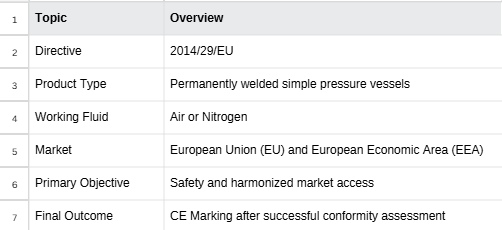
The Simple Pressure Vessels Directive (2014/29/EU) is an EU rule that applies to certain pressure vessels that are permanently welded and are used to hold air or nitrogen under pressure.
The main goal of this Directive is to set a common set of safety standards.
This allows approved pressure vessels to be sold in Europe without any issues.
Instead of each country in Europe setting its own rules, the SPVD provides a统一 approach.
This means manufacturers follow the same rules when designing, making, checking, testing, and keeping records of their products.
For companies that want to sell their products in Europe, following the SPVD is not just about obeying the law.
It is also a key part of how they develop their products.
SPVD at a Glance

Why SPVD Matters for Manufacturers
Global customers today don’t just look at the quality of the products they buy—they also check if the products meet the rules and laws of the countries where they’ll be sold.
For companies making pressure vessels to be used in Europe, it’s important to make sure they follow all the rules well before they start making the product.
If you plan things like how the product is designed, where the materials come from, how the welding is done, and what inspections are needed, you can handle these tasks more smoothly during the manufacturing process.
If a company understands what it needs to do early on, it will be in a better position when it comes to customer reviews and getting approval for the product.
The SPVD helps by creating a shared standard across all European countries.
This makes it easier because you don’t have to deal with many different national rules to find the right directive for your product.
Did You Know?
A common mistake is thinking that all pressure vessels in Europe are covered by the same rule.
In reality, the right rule depends on several factors.
Which Products Fall Under SPVD?
Not every pressure vessel is covered by SPVD. This doesn’t apply to all types, especially certain permanently welded pressure vessels that meet specific technical requirements set out in the Directive.
Some examples of products that might be included are:
– Compressed air receivers
– Industrial air storage tanks
– Welded steel pressure vessels
– Welded aluminum pressure vessels
– Stationary air pressure vessels used in industrial settings
Whether a vessel is covered by SPVD depends on several technical factors, such as:
– The type of fluid it holds
– The maximum pressure it can handle
– Its size or volume
– The material it’s made from
– The way it’s made
– Its intended use
Understanding these factors early in the project can help prevent the need for redesigning or redoing documents later during production.
Understanding the SPVD Compliance Journey
Manufacturers often believe that following the Simple Pressure Vessels Directive starts with an inspection or audit.But actually, it starts much earlier, during the design stage.
Every decision made during product development, whether it’s choosing materials or preparing technical documents, plays a role in showing that the product meets the requirements of the Simple Pressure Vessels Directive (2014/29/EU).
If compliance is only thought about near the end of production, it can lead to more work, extra testing, and delays in getting the project done on time.
Planning the manufacturing process carefully helps keep things consistent, makes it easier to track everything, and ensures proper documentation throughout the product’s entire life.
The process of complying with SPVD is made up of several connected steps that work together.
SPVD Compliance Journey
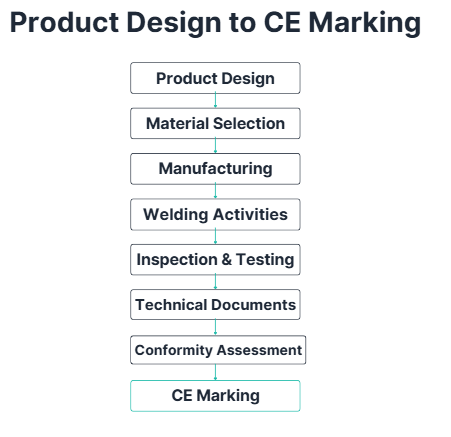
Each step helps show that the completed pressure vessel meets all the necessary rules before it is sold in Europe.
Essential Safety Requirements of SPVD
The basis of SPVD is a group of important safety rules meant to lower risks related to pressure vessels throughout their whole use period.
These rules affect how makers design, build, check, and confirm their products.
Instead of focusing on just one part of the process, the Directive looks at the entire life of the vessel.
Main areas usually cover:
– Designing the product safely
– Choosing the right materials
– Following controlled manufacturing methods
– Doing proper welding
– Checking and confirming the product
– Testing for pressure
– Marking the product correctly
– Keeping proper technical records
Following these rules isn’t just about filling out extra forms after the product is made.
They should be thought about right from the start of planning the product.
From the manufacturer’s point of view, it’s often easier to follow the rules when the paperwork and quality checks happen at the same time as the manufacturing process, instead of waiting until everything is done.
Design and Material Considerations
All pressure vessels begin with design decisions.
The kind of material used, the thickness of the walls, the shape of the vessel, the design pressure, and the conditions it will operate under all affect whether the final product meets SPVD compliance standards.
Manufacturers need to carefully plan and check their calculations and material choices.
Being able to track the materials used during production is also very important. Material documentation and traceability are also important for pressure vessel manufacturing. Where independent verification of metallic material is required, manufacturers may use EN 10204 3.2 inspection certification.
This helps ensure the final product is reliable.
Some common factors that manufacturers take into account include:
– Design Pressure
– Vessel Shape
– Material Type
– Mechanical Properties
– Whether it’s possible to make the vessel
– Effects of Corrosion
– Operating Conditions
Manufacturing and Welding
The way something is made has a big effect on how well it works and how safe it is, especially for pressure vessels.
Right from the start of making the vessel, it’s important to have everything done in a consistent way.
Steps like cutting, shaping, putting parts together, welding, checking measurements, and looking at the work visually all help make the final product strong and reliable.
Among all these steps, welding is especially important because the welds help hold the vessel together and make sure it’s strong and safe.
Companies create clear plans for how to do the welding and make sure it’s done in a controlled way.
Keeping track of everything during the making process helps them know where things came from and ensures that the quality stays the same every time.
Here’s what a typical manufacturing process looks like:
– Identifying the materials used
– Preparing the parts
– Doing the welding
– Checking the work as it’s being made
– Checking the size and shape
– Doing a final check to look for any problems
Did You Know?
Many issues that affect the quality of the product are found during the manufacturing process, not just at the end.
Catching these problems early can save time and money by reducing the need for extra work and helps make the production process run more smoothly.
Related Reading:
EN ISO 3834 Certification for Welding Quality Requirements.
For welded pressure vessels, documented welding procedures and qualified welding procedures are important parts of manufacturing control. WPS and WPQR provide documented evidence that the applicable welding procedure has been qualified.
Inspection and Pressure Testing
Before the vessel is sold, it goes through checks to make sure it was made to meet all the design and quality standards that apply.
These checks aren’t only done at the end of the making process.
They can happen during the process to check the work done, the size of parts, how materials are identified, and the general quality of the product.
One of these checks is pressure testing, which shows how well the product works under pressure.
Depending on the product and what rules apply, the checks might include:
– looking at the product visually,
– checking its size and shape,
– doing pressure tests,
– testing for leaks,
– checking that the records from making the product are correct.
The goal of all these checks is to make sure the vessel works properly.
Technical Documentation
Technical documentation is a very important part of following SPVD rules.
This type of documentation shows that the pressure vessel was designed, made, and checked properly according to the rules.
Even though the exact papers needed can change depending on the product and the approval process, most companies keep records throughout the project, not just when it’s finished.
Some examples of this documentation include:
– Engineering drawings
– Design calculations
– Material certificates
– Welding procedure records
– Test results
– Product identification
– Declaration of Conformity
Having well-organized documents makes it easier for people to check the product later.
A good tip for manufacturers is that preparing documents during the manufacturing process is usually more efficient than collecting them after the process is done.
Conformity Assessment and CE Marking
In the final steps of meeting regulations, it’s important to make sure that the proper conformity assessment process has been done before selling the pressure vessel in Europe.
Depending on the product’s features, different conformity assessment modules might be needed.
Once all the requirements are satisfied, the manufacturer should create the required documents and add the CE mark as required by the Directive.
Instead of thinking of the CE mark as just a label added after making the product, it should be seen as the outcome of the whole manufacturing process.
Common Challenges Manufacturers Face During SPVD Compliance
For most manufacturers, following the technical standards from the Simple Pressure Vessels Directive is just one of several challenges they face.Another big issue is correctly identifying which Directive applies to their product early on and making sure all technical documents stay consistent during production.
Most compliance issues happen later in the manufacturing process, not because the product is poor quality, but because of poor planning earlier on.
Some of the most common problems are:
– Choosing the wrong Directive for the product.
– Having incomplete or inconsistent technical records.
– Not being able to track materials used in production.
– Not having enough details on welding work.
– Changing the design without keeping proper records.
– Not having enough inspection records.
– Spending too much time preparing documents after production is done.
Many of these issues can be avoided if compliance is properly included in the manufacturing process from the start.
From the manufacturer’s point of view, compliance isn’t just something done before shipping.
It’s a continuous process that begins with product design and ends when the vessel is ready for the European market.
Industries Applicable
Pressure vessels made under the SPVD framework are used in many different industries where compressed air and nitrogen play an important role in daily operations.
Even though these vessels are used in various ways across different sectors, their main job is to safely and effectively store compressed gases.
The industries that use them most often include:
– Manufacturing and Industrial Processing
– Automotive Manufacturing
– Food & Beverage Processing
– Pharmaceutical Manufacturing
– Textile Industry
– Packaging Plants
– Machine Building
– Engineering Equipment Manufacturing
– Pneumatic Systems
– Industrial Automation
Because European industries are placing more emphasis on product safety and following the law, companies making products for these industries must make sure they follow all the required regulations before selling their products.
Export Readiness Checklist for Manufacturers
Before putting a pressure vessel on the European market, manufacturers need to check if the product and its documents are ready for the required conformity assessment process.
Here’s a helpful checklist to start with.
| Manufacturing Activity | Status |
|---|---|
| Product design completed | ☐ |
| Applicable Directive identified | ☐ |
| Material certificates available | ☐ |
| Manufacturing records maintained | ☐ |
| Welding records completed | ☐ |
| Inspection records available | ☐ |
| Pressure testing completed | ☐ |
| Technical documentation prepared | ☐ |
| Declaration of Conformity prepared | ☐ |
| CE Marking requirements verified | ☐ |
Conclusion
SPVD 2014/29/EU compliance begins with understanding whether the pressure vessel falls within the Directive’s scope and then following the applicable requirements for design, materials, manufacturing, welding, testing, documentation and conformity assessment. For manufacturers targeting the European market, preparing these requirements from the early stages of production can make the certification process more structured and reduce compliance issues.
When the applicable requirements are met and the conformity assessment is completed, the manufacturer can proceed with the required documentation and CE marking for the vessel.
Frequently Asked Questions
What is SPVD 2014/29/EU and which pressure vessels does it cover?
SPVD 2014/29/EU is the EU Directive for simple pressure vessels manufactured in series. It generally applies to certain welded vessels intended to contain air or nitrogen, with an internal pressure above 0.5 bar and subject to the Directive’s material, pressure, temperature and design conditions.
What are the main SPVD certification requirements for manufacturers?
SPVD certification requirements include meeting the applicable essential safety requirements, controlling the manufacturing process, using suitable materials, maintaining technical documentation and records, carrying out the required inspections and tests, completing conformity assessment, preparing the EU Declaration of Conformity and applying the CE marking where required.
Is CE marking required for simple pressure vessels under SPVD 2014/29/EU?
Yes, simple pressure vessels within the scope of SPVD generally require CE marking after the applicable conformity assessment procedure has been completed. Where a notified body is involved in the production-control phase, its identification number accompanies the CE marking
Does SPVD certification apply to air receivers and EN 286-1 pressure vessels?
Air receivers can fall under SPVD when they meet the Directive’s definition and scope conditions. EN 286-1 is a relevant harmonised standard for certain simple pressure vessels, but the applicability of SPVD should be determined from the vessel’s actual design, materials, pressure, capacity, temperature and intended use.
What documents are required for SPVD certification and CE marking?
SPVD technical documentation can include product design information, drawings and calculations, material information, manufacturing and welding records, inspection and test results, conformity assessment records, product identification and the EU Declaration of Conformity. The exact documentation depends on the applicable conformity assessment procedure and vessel.
SPVD Certification by First Welding Certification Pvt. Ltd.
First Welding Certification Pvt.Ltd.(PRVÁ ZVÁRAČSKÁ, a.s.) offers SPVD (2014/29/EU) Certification to manufacturers who need certification for pressure vessels meant for the European market.The company has a lot of experience in international welding and product certification, and they provide certification that follows widely accepted global standards.