
EN 10204 Type 3.2 Malaysia
Malaysian steel producers
Type 3.2 material inspection
How Malaysian Steel Producers Prepare for EN 10204 Type 3.2: From Steel Production to Material Inspection
By First Welding Certification Technical Editorial Team
6 Mins Read Time
27 Oct 2026
Table Of Content
- Introduction
- What Is EN 10204 Type 3.2?
- Why Is Type 3.2 Important for Malaysian Steel Producers?
- Who May Need to Provide Type 3.2 Documentation?
- How to Prepare for EN 10204 Type 3.2
- What Is the Difference Between Type 3.1 and Type 3.2?
- What Documentation Should Be Prepared?
- Frequently asked questions
- Related Searches
- Conclusion
Exporting Pressure Equipment to Europe? Do Check
Purchase Order Review
Confirm steel grades, specifications and inspection requirements.
Steel Production
Maintain production records and verify manufacturing requirements
Material Testing
Check chemical composition, mechanical properties and test results
Type 3.2 Inspection
Coordinate inspection validation and verify material documentation
How Malaysian Steel Producers Prepare for EN 10204 Type 3.2
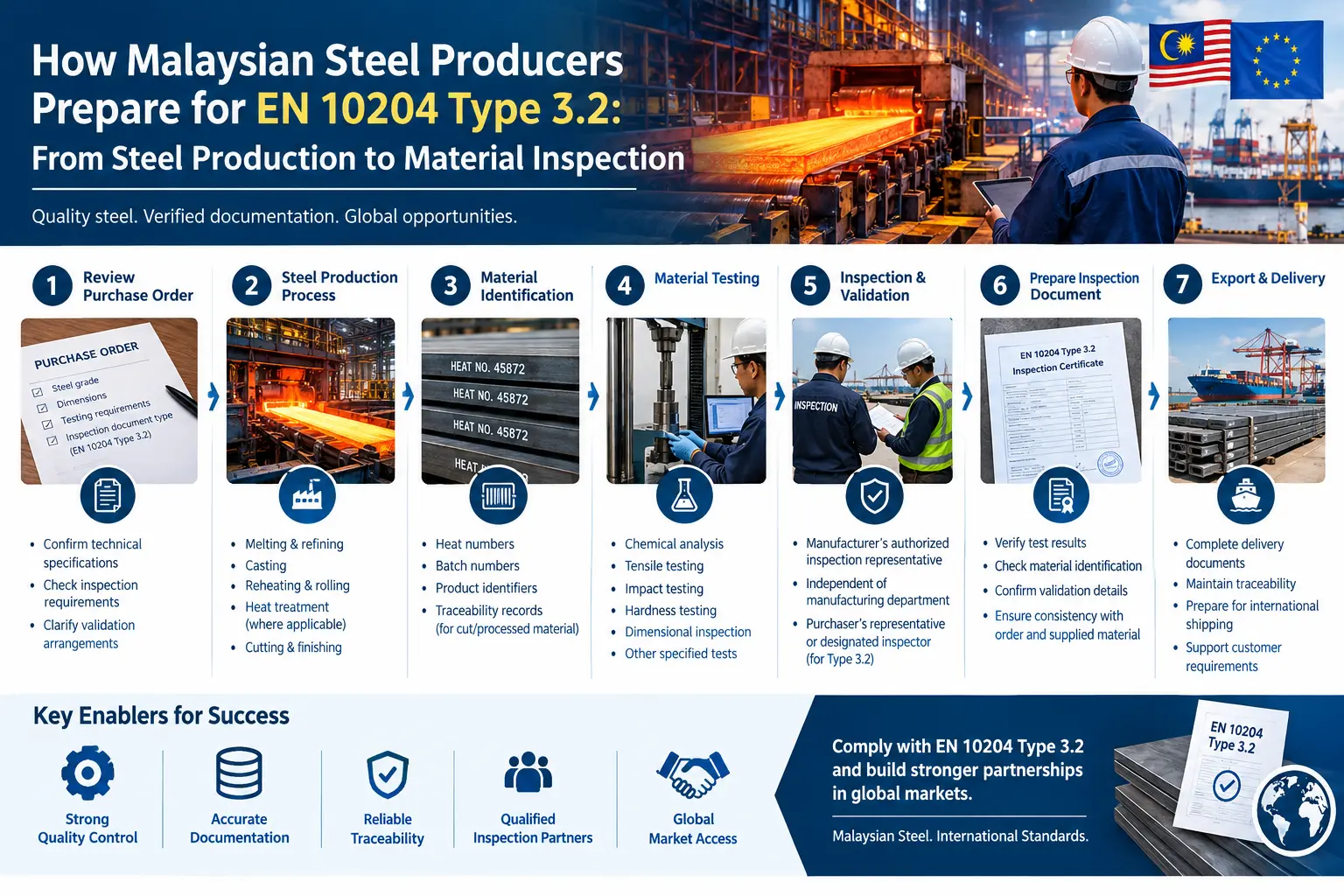
Introduction
Malaysia’s steel industry supports a wide range of activities, including construction, infrastructure development, engineering, fabrication and industrial manufacturing. When supplying international markets, steel producers must pay close attention to product specifications, inspection requirements and material documentation.
Buyers in Europe may request EN 10204 Type 3.2 inspection documents to verify that supplied metallic products meet the agreed requirements. Preparing for this document involves coordinating production records, material testing, traceability and inspection arrangements.
This blog explains the practical steps Malaysian steel producers can take to prepare for EN 10204 Type 3.2.
1. What Is EN 10204 Type 3.2?
EN 10204 Type 3.2 specifies different types of inspection documents used to demonstrate the conformity of metallic products with the relevant order requirements. A Type 3.2 inspection document is validated by the manufacturer’s authorised inspection representative, who is independent of the manufacturing department, together with the purchaser’s authorised inspection representative or an inspector designated under the applicable official regulations.
For example, a Malaysian steel mill supplying steel plates to a European equipment manufacturer may be asked to provide a Type 3.2 document. The producer should establish the applicable product requirements, arrange the necessary inspection activities and ensure that supporting records are available.
The required document type must be determined from the purchase order, applicable product specification and relevant regulatory requirements.
2. Why Is Type 3.2 Important for Malaysian Steel Producers?
International buyers may require documented evidence that steel products satisfy specified chemical, mechanical and other technical requirements. Appropriate inspection documentation can improve traceability, support verification and help suppliers meet contractual obligations.
Key considerations include conformity evidence, reliable material identification, complete test records, organised export documentation and consistency between supplied products and their inspection documents.
However, providing a Type 3.2 document does not automatically guarantee acceptance of every shipment. The products must still satisfy the applicable specification, purchase order and acceptance criteria.
3. Who May Need to Provide Type 3.2 Documentation?
The need for Type 3.2 documentation depends on the product, its intended application, the purchaser’s requirements and any applicable regulations.
Steel mills producing plates, coils, bars, sections and other metallic products may receive orders specifying particular inspection documents. Structural steel manufacturers and suppliers should maintain material identification and testing records while considering any applicable requirements associated with EN 1090.
Producers supplying materials for boilers, pressure vessels and heat exchangers may need to address additional inspection and material verification requirements. Suppliers serving the oil, gas and petrochemical industries may encounter detailed contractual specifications
Railway and infrastructure supply chains may also require enhanced material verification for particular applications. Type 3.2 documentation is not automatically mandatory for every company operating in these sectors.
4. How to Prepare for EN 10204 Type 3.2
Step 1: Review the purchase order. Confirm the steel grade, applicable product standard, dimensions, delivery condition, required testing and specified inspection document. If Type 3.2 is requested, clarify the inspection arrangements and validation requirements before production or delivery.
Step 2: Review the manufacturing process. Depending on the product, production may include melting, refining, casting, reheating, rolling, heat treatment, cutting and finishing. Identify the production records needed to demonstrate that the supplied material meets the relevant requirements.
Step 3: Establish material traceability. Ensure that heat, cast, batch or product identification is maintained throughout production, storage and dispatch. If plates or sections are cut into smaller components, preserve the link between the resulting pieces and the original material identification.
Step 4: Complete the required testing. Depending on the product specification and purchase order, testing may include chemical analysis, tensile testing, impact testing, hardness measurements and dimensional checks. Not every test applies to every product. Confirm the applicable test methods, acceptance criteria and required records before inspection.
Step 5: Arrange inspection and validation. When Type 3.2 is specified, coordinate with the relevant inspection representatives and agree on the required inspection activities, timing and supporting evidence. The manufacturer’s authorised inspection representative must participate in the validation arrangements alongside the purchaser’s authorised inspection representative or an appropriately designated inspector. Internal quality approval alone should not be assumed to satisfy the Type 3.2 requirements.
Step 6: Check the inspection document. Verify that the material grade, product identification, relevant test results and required validation details are consistent with the purchase order and supporting records. Resolve discrepancies before the document is issued.
Step 7: Complete delivery checks. Before dispatch, confirm that the products are correctly identified and accompanied by the required inspection document and applicable shipping records. Ensure that the documentation matches the actual materials being supplied.
5. What Is the Difference Between Type 3.1 and Type 3.2?
Both EN 10204 Type 3.1 and Type 3.2 documents provide inspection information relating to conformity with the order requirements, but their validation arrangements differ. For Type 3.1, the manufacturer’s authorised inspection representative, independent of the manufacturing department, validates the document.
Type 3.2 additionally involves validation by the purchaser’s authorised inspection representative or an inspector designated under the applicable official regulations.
The testing evidence required depends on the product specification and order. If a purchaser specifies Type 3.2, the supplier should not assume that a Type 3.1 document is an acceptable substitute. Any proposed alternative should be agreed upon with the purchaser and assessed against applicable requirements.
6. What Documentation Should Be Prepared?
The records required will vary according to the steel product, applicable specification and purchase order. Malaysian steel producers should establish a document checklist covering the purchase order, steel grade, product standard, dimensions, delivery condition and specified inspection requirements. Production records should support heat or cast identification, batch identification, manufacturing history where relevant and material traceability.
Testing records may include chemical analysis, mechanical testing, dimensional inspection and other results required by the order. Final inspection records should demonstrate that the relevant requirements have been addressed and that the required Type 3.2 validation arrangements have been completed. The final document package should be checked for consistency before shipment.
Frequently Asked Questions
When should Malaysian steel producers arrange Type 3.2 inspection?
During order planning, before the agreed inspection stages begin, to coordinate inspectors and avoid shipment delays.
What happens if steel plates are cut before material identification is transferred?
Traceability may be lost. Producers should transfer and record the original material identification on cut pieces.
How can producers reduce delays during inspection document preparation?
Prepare production records, test reports and material identification details in advance, then check them against the purchase order.
Can one shipment contain steel with different heat numbers?
Yes, where permitted by the order and product requirements. Each material batch must remain correctly identified and linked to its supporting inspection records
What should Malaysian exporters check before shipping steel to Europe?
Confirm that the supplied material, inspection documents, traceability records and agreed delivery requirements are consistent before dispatch.
Related Searches
- When Is EN 10204 Type 3.2 Certification Required for PED Pressure Equipment Globally?
- EN 10204 Revision Watch 2026: What the Proposed Standards Update Could Mean for Material Inspection Documents
- EN 10204 Type 3.2 Inspection Planning: ITP Requirements, Hold Points and Inspector Coordination
- What Should Buyers Verify in an EN 10204 Type 3.2 Certificate for Steel Plates, Pipes and Structural Steel in India?
Conclusion
Preparing for EN 10204 Type 3.2 requires more than producing a material inspection document. Malaysian steel producers should review purchase requirements early, maintain accurate production and testing records, preserve material traceability and coordinate the required inspection and validation arrangements. A structured documentation process can help suppliers respond more effectively to international customer requirements and reduce avoidable delays caused by incomplete or inconsistent records. Before supplying steel to a European customer, manufacturers should confirm the applicable product specification, contractual requirements and inspection arrangements for the specific order.
Supplying Steel to International Markets? Prepare for EN 10204 Type 3.2
First Welding Certification Pvt Ltd (PRVÁ ZVÁRAČSKÁ, a.s.) works in conformity assessment and certification. Understand the inspection documentation, material traceability and validation requirements relevant to your steel products and customer orders.
Visit our EN 10204 Type 3.2 page to explore the applicable inspection