
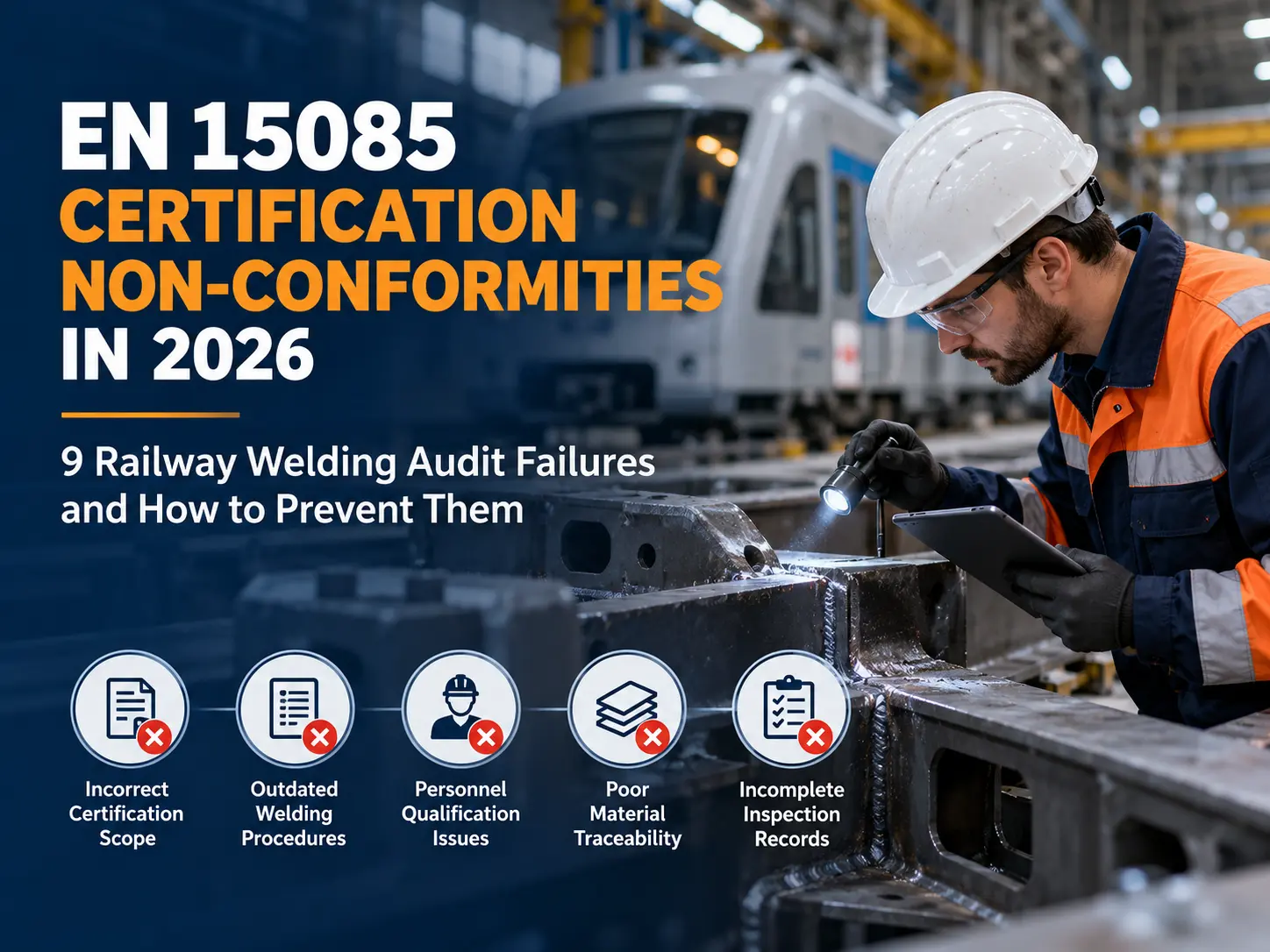
EN 15085
AUDIT
CHECKLIST
28 Oct 2026
EN 15085 Certification Non-Conformities in 2026: 9 Railway Welding Audit Failures and How to Prevent Them
By Editorial Team
Table Of Contents
- What Is EN 15085 Certification?
- 9 Common EN 15085 Audit Failures and Their Solutions
- EN 15085 Audit Preparation Checklist
- EN 15085 Certification Assessment Flowchart
- EN 15085 vs EN ISO 3834: Is ISO 3834 Enough?
- Is ISO 3834 enough for railway welding?
- Digital Welding Records for Railway Manufacturing
- EN 15085 Certificate Validity and Renewal
- Frequently Asked Question
- Conclusion
Related Blogs
SEP
09
EN 15085 Latest Edition 2026: EN 15085-2:2025 Update for Indian & International Manufacturers
AUG
31
CL1 vs CL2 vs CL3: Understanding EN 15085 Classification Levels Correctly
AUG
21
EN 15085 Certification in Chennai: 10 Common Audit Problems Railway Manufacturers Face
AUG
19
EN 15085 Certification Cost in India: What Determines the Price?
JLY
29
EN 15085 Certification Requirements: What Railway Manufacturers Should Check Before Certification
Railway welding needs strong, flawless welds, properly trained workers, approved methods, materials that can be tracked, and dependable checks. Small mistakes in records can lead to problems with meeting standards. Knowing why EN 15085 certifications fail helps makers improve their compliance and get ready for assessments in 2026.This guide lists nine typical issues found during audits and ways to avoid them.
What Is EN 15085 Certification?
EN 15085 standards are about welding for railway vehicles and parts. They set out what manufacturers need to do in designing, making, checking, and keeping railway vehicles in good condition. Getting certified means a company follows these rules, but staying certified requires keeping a close eye on how welding is done, making sure welders are properly trained, keeping good records, and managing the whole production process.
9 Common EN 15085 Audit Failures and Their Solutions
1. Incorrect Certification Scope
Manufacturers might perform welding tasks that are not properly covered by their current certification programs.
To avoid this, they should:
- Check the certification level and what it covers.
- Find out which welding methods and production tasks are relevant.
- Look at how expanding the scope might affect things before taking on new projects.
- Review the design rules from EN 15085-3 when needed.
Having a written process for choosing the scope of EN 15085 certification helps make sure the certified work matches what is actually being made.
2. Outdated Welding Procedures
Using old drawings, wrong Welding Procedure Specifications (WPS), or missing production instructions can lead to problems with following the rules.
How to stop this:
- Keep the welding procedure register up to date according to EN 15085.
- Check that the right WPS and related qualification records are in place.
- Make sure everyone knows about any changes to the drawings.
- Look at the EN 15085-4 rules for planning welding production.
The people making the products should always have the correct and approved documents available.
3. Incomplete Personnel Qualification Records
Outdated qualifications, missing records, or incorrect qualification ranges can cause issues when assessing welders.
To avoid these problems:
- Keep welder qualification records up to date and correct.
- Check welding operator qualifications when needed.
- Follow the validity of qualifications and ensure proper evidence of continuity.
- Give work to people who have the right qualifications for the job.
Good management of welding personnel qualifications under EN 15085 helps make sure that workers are fit for the tasks they are given.
4. Poor Material Traceability
Manufacturers might have trouble linking material certificates and batch numbers to specific parts.
To avoid this issue:
- Set up clear traceability rules for railway welding materials.
- Keep track of material details when they are received, stored, and used in production.
- Link material records to production orders and individual parts.
- Ensure a strong connection between materials and the welds made in railway manufacturing.
- Having a good traceability system in place makes it easier to find and check important records when needed.
5. Incomplete Inspection Records
Missing inspection reports or unclear approval decisions can make it hard to show that welding standards have been followed properly.
How to prevent this:
- Create inspection plans according to the required standards.
- Keep track of part details, the inspection methods used, and the results.
- Set clear acceptance standards before starting the inspection.
- Use a controlled template for railway welding inspection records.
Check the relevant EN 15085-5 inspection and testing rules, as well as the EN 15085-3 weld inspection requirements.
6. Uncontrolled Weld Repairs
Fixing problems without the right permission, records, or check-ups can lead to more issues with quality.
To stop this from happening:
- Write down the original problem.
- Stick to the approved steps for fixing welds on trains
- Keep track of all the repair work and who did it.
- Check if there are any required checks after fixing the weld.
- Write up the final check results and what was done.
Each repair should be linked back to the original problem and how it was fixed.
7. Unclear Design Requirements
Incomplete weld details or unclear changes in the drawings can cause problems during production and inspection.
How to avoid this:
- Check the design requirements from EN 15085-3.
- Make sure the weld information and inspection needs are clear.
- Keep track of any changes to the drawings.
- Let the production and inspection teams know about approved changes.
Good design documents help makers follow the right rules during production.
8. Weak Maintenance Welding Controls
Maintenance welding can have different technical requirements compared to building something new.
How to prevent issues:
- Check the EN 15085-6 standards for maintenance welding.
- Set up proper approval processes for repairs and inspections.
- Make sure welders are qualified and follow correct welding methods.
- Keep track of part identification and repair history.
Manufacturers should also make sure their certification includes the necessary activities.
9. Incomplete Certification Documentation
Missing records and not taking proper steps to fix issues can slow down the assessment process or leave problems that were already found fixed.
How to prevent it:
- Make sure you have all the necessary documents for the certification application.
- Check the procedures, qualifications, and inspection records.
- Do an internal check to find any gaps.
- Write down the main reasons for the problems and the steps taken to fix them.
- Make sure the fixes actually work.
You should confirm with the chosen certification body about the application process for EN 15085 and the evidence they need.
EN 15085 Audit Preparation Checklist
| Area | What to Verify |
|---|---|
| Certification Scope | Activities, processes, and applicable classification |
| Welding Procedures | Current WPS and supporting records |
| Personnel | Qualifications and validity evidence |
| Materials | Identification and traceability |
| Inspection | Reports, results, and acceptance criteria |
| Repairs | Repair procedures and reinspection evidence |
| Design | Drawings and revision control |
| Maintenance | Applicable procedures and scope |
| Documentation | Application records and corrective actions |
EN 15085 Certification Assessment Flowchart
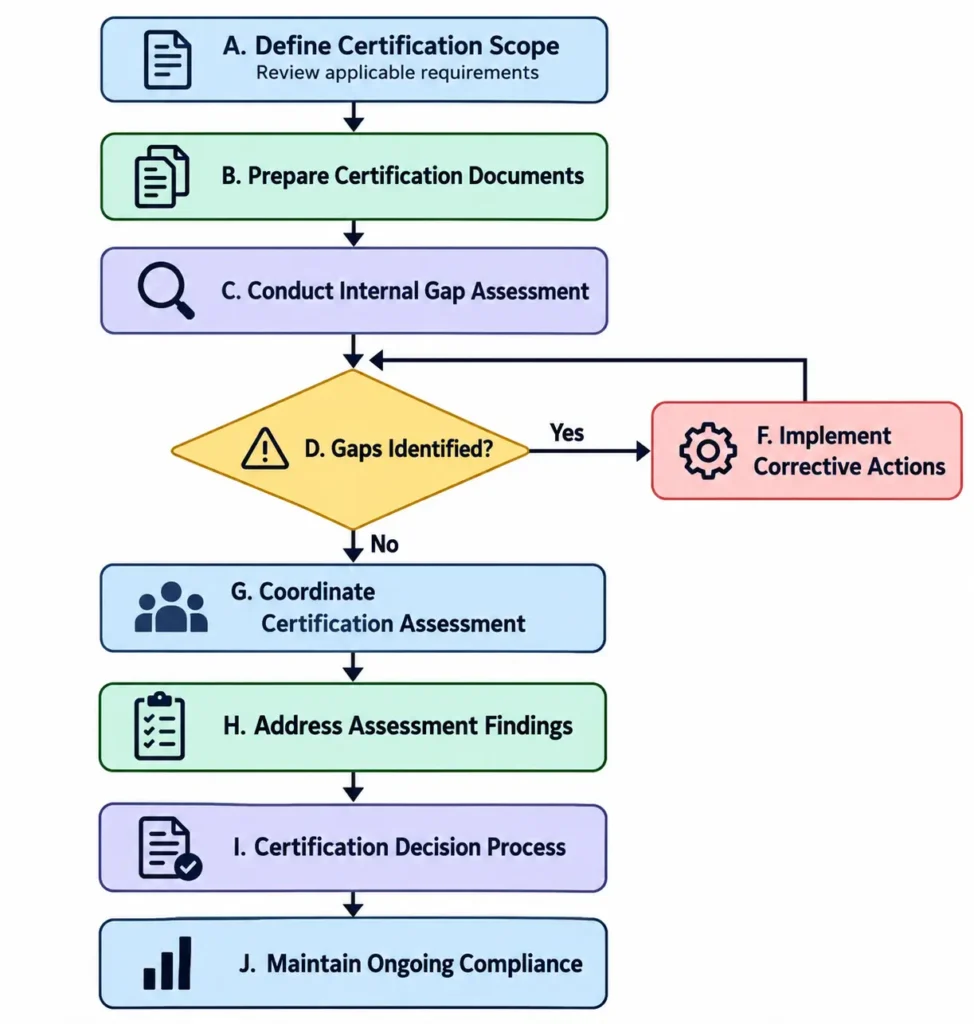
This is a sample process for preparation. The real steps in the evaluation may vary based on the specific certification program and the organization carrying out the certification.
EN 15085 vs EN ISO 3834: Is ISO 3834 Enough?
Many railway companies already have ISO 3834 certification and are wondering if they need any extra certification.
| Area | EN ISO 3834 | EN 15085 |
|---|---|---|
| Design and Production | Relevant welding quality controls | Includes railway design and production requirements |
| Main Focus | Quality requirements for fusion welding | Welding of railway vehicles and components |
| Railway-Specific Requirements | Not a dedicated railway certification framework | Addresses railway-specific welding requirements |
| Maintenance Welding | Does not replace applicable railway-specific requirements | Includes maintenance welding requirements |
Is ISO 3834 enough for railway welding?
Not necessarily. Having an ISO 3834 certificate doesn’t mean a company is automatically following all the EN 15085 rules. Before taking on railway projects, manufacturers need to check what the customer wants, what certifications are needed, and what the project covers.
Digital Welding Records for Railway Manufacturing
Digital systems can help make documentation, tracking, and finding records easier if they are set up properly.
A digital system can link together:
- Material certificates and batch numbers.
- Welding procedures and related qualification records.
- Welder and welding operator qualifications.
- Production and inspection records.
- Repair records and final approval decisions.
For railway manufacturing, digital welding records should have good security, track changes, ensure accurate data, and keep records for the right amount of time.
Digital tools should help with existing quality processes instead of taking the place of necessary technical checks.
EN 15085 Certificate Validity and Renewal
Manufacturers need to keep track of the conditions on their certificate, any required reassessments, and any changes in their production processes.
Before renewing an EN 15085 certificate, check the qualifications of the staff, the procedures used, inspection records, corrective actions taken, and any changes that might affect the scope of the certification.
If transferring EN 15085 certification, talk to both the current and new certification bodies to make sure you understand the correct process.
Make sure the certificate’s validity and renewal terms match what is written on the actual certificate and the relevant certification scheme.
Frequently Asked Questions
What are common EN 15085 certification non-conformities?
Common areas to check are the certification scope, welding methods, qualifications of the workers, tracking of materials, records of inspections, repairs done on welds, and how documents are managed.
What is EN 15085-2 certification levels explained simply?
EN 15085-2 covers the requirements for welding manufacturers, which include different classification levels usually called CL 1, CL 2, and CL 3. The right level is chosen based on the classification rules that apply and the specific needs of the component.
How long does EN 15085 certification take?
The time it takes depends on how much of the product is being checked, what controls are already in place, any areas that need improvement, and when the certification group is available. There isn’t one set time that works for all manufacturers.
What documents are needed for certification?
The requirements can be different, but the documents needed might include information about the company, details about the project scope, welding methods, qualifications of the workers, records of materials used, and documents showing inspections. You should check with the certification organization to find out exactly what is required.
Does certification guarantee defect-free welds?
A certification shows that the work meets the necessary standards in the specific area it covers. It doesn’t mean that every weld is perfect and free of problems.
Conclusion
Preventing issues with EN 15085 certification begins with having good control during production, trained workers, clear tracking of materials, and full records of inspections.
Manufacturers should check their certification area, welding methods, maintenance plans, and ways to fix problems often, not just before an audit.
Taking action early can make documents more accurate, improve the quality of welding, and help railway suppliers get ready for certification checks.
Need help with EN 15085 certification?