
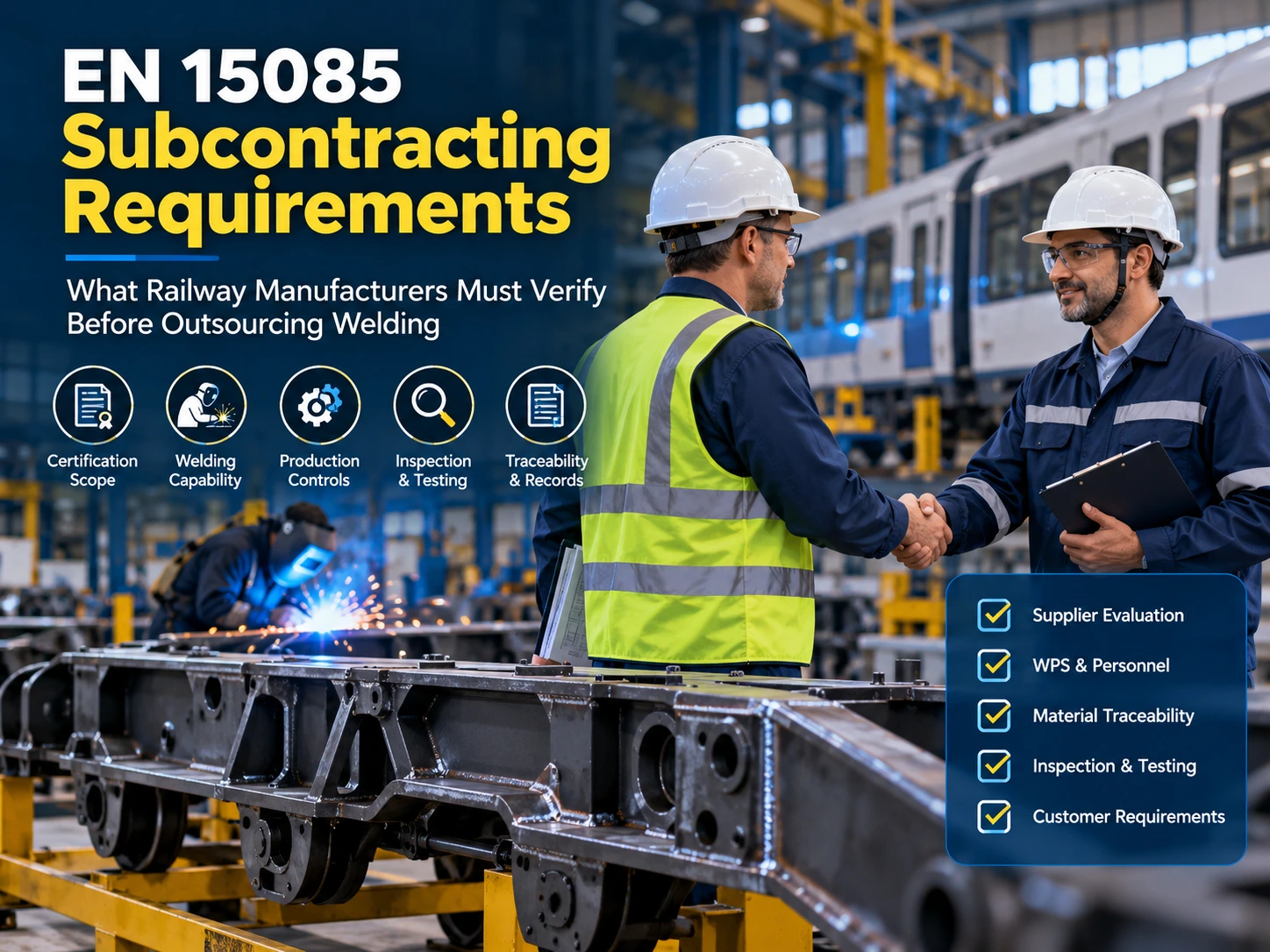
EN 15085
CHECKLIST
VERIFICATION DOCUMNET
13 Oct 2026
EN 15085 Subcontracting Requirements: What Railway Manufacturers Must Verify Before Outsourcing Welding
By Editorial Team
Table Of Contents
- 1. Why Are Subcontracting Controls Important Under EN 15085?
- 2. What Should Manufacturers Verify Before Outsourcing Welding?
- 3. Verify the Subcontractor's Certification and Technical Scope
- 4. Control Welding Procedures, Personnel and Coordination
- 5. Maintain Material Traceability and Inspection Records
- 6. EN 15085 Subcontracting Workflow: From Supplier Evaluation to Acceptance
- 7. Common Subcontracting Mistakes to Avoid
- 8. EN 15085 Subcontractor Approval Checklist
- Conclusion
Related Blogs
SEP
09
EN 15085 Latest Edition 2026: EN 15085-2:2025 Update for Indian & International Manufacturers
AUG
31
CL1 vs CL2 vs CL3: Understanding EN 15085 Classification Levels Correctly
AUG
21
EN 15085 Certification in Chennai: 10 Common Audit Problems Railway Manufacturers Face
AUG
19
EN 15085 Certification Cost in India: What Determines the Price?
JLY
29
EN 15085 Certification Requirements: What Railway Manufacturers Should Check Before Certification
See Also.....
Outsourcing welding can help railway manufacturers handle production workload, keep costs in check, and stick to delivery times. But choosing a welding subcontractor isn’t just about finding someone with the right tools and skilled workers.
According to EN 15085-2, the company that makes the final product must check and record that their subcontractor can meet the required EN 15085 standards and any extra project needs before getting parts made.
This means checking subcontractors is a key part of making sure welding quality is up to standard in the railway industry.
Before starting production, manufacturers should look into the subcontractor’s technical skills, welding methods, worker training, inspection plans, and ability to track components.
This article covers what railway companies should check before handing over welding work and how to set up a good system for managing subcontractors.
1. Why Are Subcontracting Controls Important Under EN 15085?
A subcontractor might have up-to-date welding tools and skilled workers, but this doesn’t mean they meet all the necessary standards for a railway project.
The company placing the order needs clear proof that the subcontractor can carry out the work properly under controlled conditions.
Some main risks are:
- Picking a supplier whose certification doesn’t include the work needed.
- Using welding methods or workers who aren’t qualified for the job.
- Not being able to track materials or welds properly.
- Gets incomplete records from inspections and tests.
- Failing to follow customer rules about notifying them or doing the first check before starting production.
Good subcontractor management under EN 15085 helps manufacturers spot these problems early before they cause delays, quality issues, or problems with final approval.
2. What Should Manufacturers Verify Before Outsourcing Welding?
Use the following checks when evaluating a subcontractor for welded railway components.
| Verification area | What to check | Evidence to request |
|---|---|---|
| Certification scope | Applicable classification, activities, components and manufacturing locations | Valid certificate and scope details, where required |
| Welding coordination | Competence, responsibilities and availability of welding coordination personnel | Qualification evidence and defined responsibilities |
| Welding procedures | Suitability of the WPS and supporting WPQR for the specified work | Applicable WPS/WPQR records |
| Welding personnel | Welder and operator qualifications for the processes and work involved | Valid qualification records |
| Material control | Material identification and traceability throughout production | Material certificates and identification records, as applicable |
| Inspection and testing | Required visual inspection, NDT and acceptance criteria | Inspection and test plans, reports and personnel qualifications, as applicable |
| Production records | Control of welding parameters, equipment and nonconformities | Production records, calibration records and corrective-action documentation, as applicable |
| Customer requirements | Contractual approvals, notification and special project requirements | Contract review, approvals and documented communications |
Important: The specific requirements depend on the relevant EN 15085 rules, the type of component, the contract terms, and the work to be done. Do not assume that every item in this table applies to all subcontractors as a general certification requirement.
3. Verify the Subcontractor's Certification and Technical Scope
One of the first things to check is if the subcontractor can actually do the specific welding work needed for the project. A certificate shouldn’t be accepted just because it says EN 15085.
You need to look at whether it’s valid and covers the exact parts, welding methods, tasks, and where the work is being done. Also check if there are any extra requirements from the customer or the project.
Subcontractor scope review
Component and classification
Make sure you know the right classification and technical standards for the part that’s being sent out to the subcontractor.
Process and material capability
Check if the supplier’s approved processes and abilities match what’s in the drawings and production specs.
Location and activity
Ensure that the place where the work is being done and the specific activities involved are covered by the right certification.
Customer-specific conditions
Before placing the order, check for any extra technical, contract, or approval needs. If the work needed doesn’t match what the subcontractor can actually do, this must be fixed before production starts.
4. Control Welding Procedures, Personnel and Coordination
Subcontracted welding needs to be done with proper methods and skilled workers. The manufacturer should make sure the subcontractor has the right tools and technical measures in place for the job they’re doing.
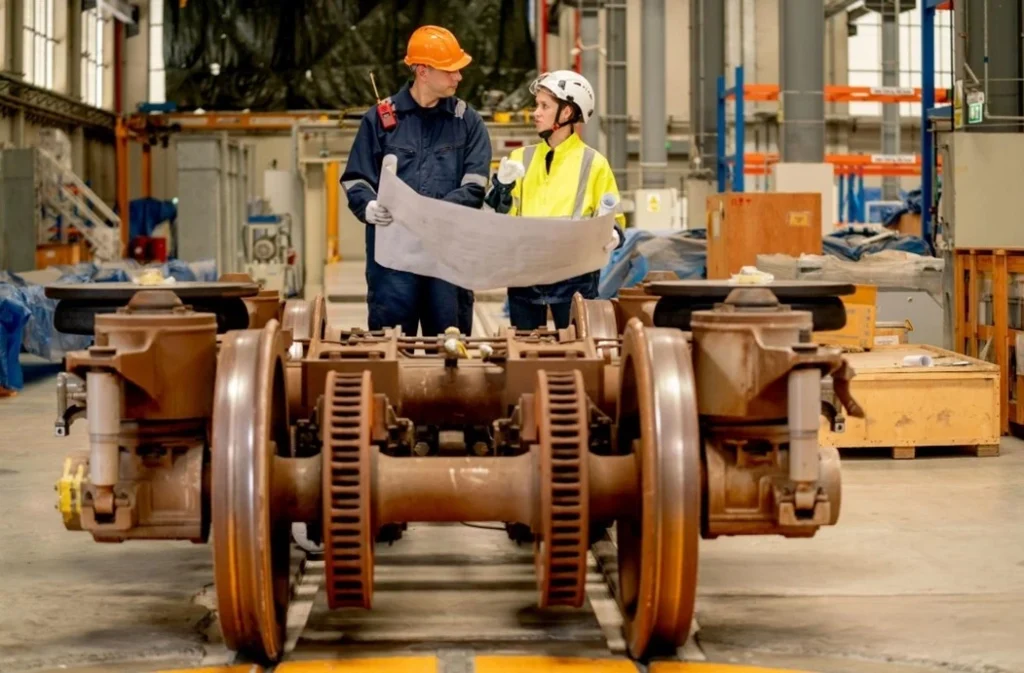
Before you approve a supplier, make sure to check these things:
- Welding Procedures and Qualifications: Ensure the welding process used matches the type of joint, material, thickness, welding method, and production conditions needed.
- Welder Qualifications: Check that the people doing the welding are properly trained and qualified for the tasks they are doing.
- Welding Coordination: Decide who will be in charge of watching over the welding work, managing the production process, and handling any problems that come up.
- Equipment and Facilities: Make sure the right tools and equipment are available, and that they are properly maintained and checked regularly.
- Inspection Plans: Confirm that there are clear steps for checking the work, doing tests, and deciding if the product is acceptable before you start making things.
The goal is to make sure the supplier can actually produce good quality work, not just to look at papers. If needed, look at some real production records or have a check done by the welding supervisor from the manufacturer.
5. Maintain Material Traceability and Inspection Records
Traceability helps a manufacturer link a completed railway part to the materials used, the welding process, and the inspection findings.
If welding is done by an outside company, the manufacturer needs to decide how this information will be written down, shared, checked, and kept.
| Record or control | Purpose | Record or control |
|---|---|---|
| Material identification | Connect the component to the applicable material documentation | Material identification |
| Welding records | Identify relevant procedures, personnel and production activities | Welding records |
| Inspection and NDT reports | Demonstrate that required inspections and tests were performed | Inspection and NDT reports |
| Nonconformity and repair records | Document defects, approved dispositions and repairs, where applicable | Nonconformity and repair records |
| Component identification | Link the subcontracted component to its supplier and production records | Component identification |
| Final documentation | Support review and acceptance before the component enters the next production stage | Final documentation |
For CL1 components, EN 15085-2:2020 sets out specific minimum rules about subcontracting: check the subcontractor’s ability to produce, let the customer know about the subcontracted welded parts and their suppliers before making them, make sure each part can be traced back to the manufacturer, and do the first article inspection as required by EN 15085-5. Before using these rules, make sure you are using the right version and any updates that apply to your project.
These special rules should not be used for all classifications without checking what applies for each one.
6. EN 15085 Subcontracting Workflow: From Supplier Evaluation to Acceptance
A written process makes sure that choices about outsourcing are made because of skills and following rules, not just because of money or how easy it is to get.
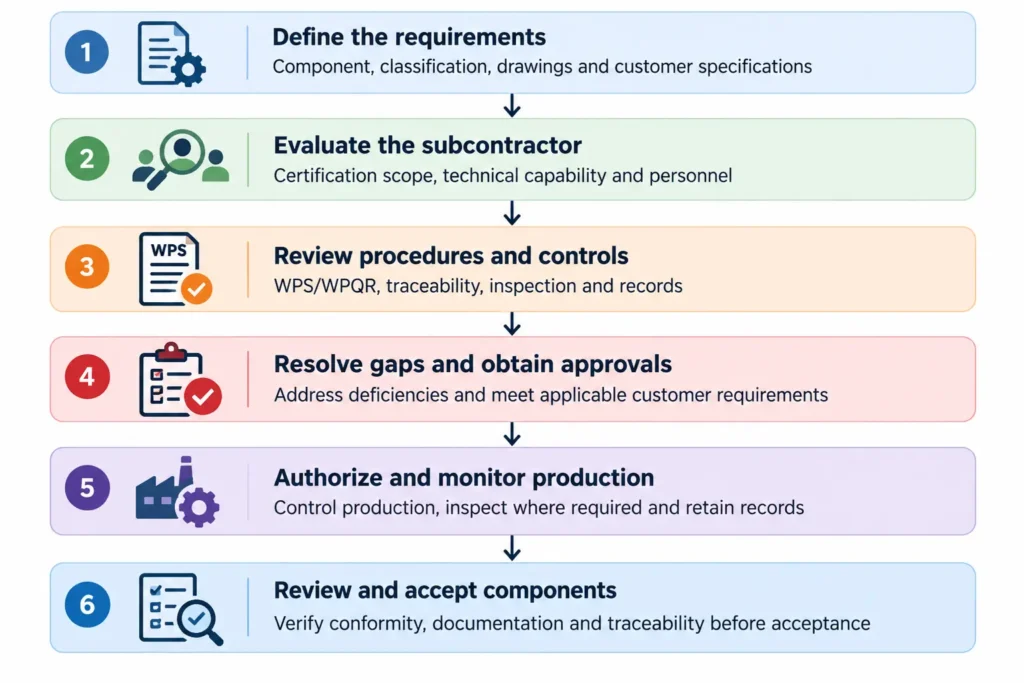
Figure: Recommended EN 15085 subcontractor control process. Use the project’s specific approval, inspection, and first article requirements whenever they are relevant.
7. Common Subcontracting Mistakes to Avoid
| Common mistake | Recommended preventive action |
|---|---|
| Approving a supplier based only on price | Evaluate technical capability and compliance before commercial approval |
| Checking the certificate but not its scope | Match the scope to the actual work and production location |
| Reviewing WPS documents without checking applicability | Verify suitability for the specified welding conditions |
| Allowing production before required approvals | Establish documented authorization and applicable customer notifications |
| Accepting components without traceability | Define identification and record-transfer requirements in advance |
| Treating first article inspection as optional in every case | Determine whether it is required under the applicable classification and standard provisions |
| Failing to monitor repeat suppliers | Use risk-based reassessment and review performance, changes and nonconformities |
These controls help prevent avoidable rework, incomplete records and delays during customer acceptance.
8. EN 15085 Subcontractor Approval Checklist
Use this checklist before placing an order for outsourced railway welding work.
EN 15085 Subcontractor Approval Checklist
[ ] Identify the component type and what work needs to be done
[ ] Check if the certification is still valid, what it covers, and where the work will be done
[ ] Look at the WPS/WPQR and make sure the welders are properly qualified
[ ] Make sure who is responsible for coordinating the welding process
[ ] Set up rules for identifying materials and tracking them back to their source
[ ] Agree on how inspections, non-destructive testing, and acceptance will be done
[ ] Check if the customer needs to be informed or approved at certain steps
[ ] Decide if a first article inspection is needed
[ ] List what records must be kept and what documents need to be delivered
[ ] Keep a record of the supplier’s evaluation and approval
This checklist is a useful tool for managing internal processes, but it’s not a replacement for the full standard, required certifications, or any specific customer rules.
Conclusion
Outsourcing welding for railway vehicles and parts needs more than just picking a supplier with experience. Manufacturers need to make sure that the work done by subcontractors meets the EN 15085 standards. They also need to confirm that the right controls, approvals, and records are in place.
Before starting production, railway manufacturers should check the subcontractor’s certification coverage, welding methods, staff skills, ability to track the work, and inspection plans.
This helps lower the risk of not meeting rules and gives better control over the whole supply chain.
The main idea is straightforward: check the subcontractor’s ability before starting the job, clearly set out who is responsible for what, and keep proof that the work meets the required standards.
For manufacturers looking at their welding compliance processes, First Welding Certification Certification Pvt. Ltd. can provide more information on EN 15085 certification.