
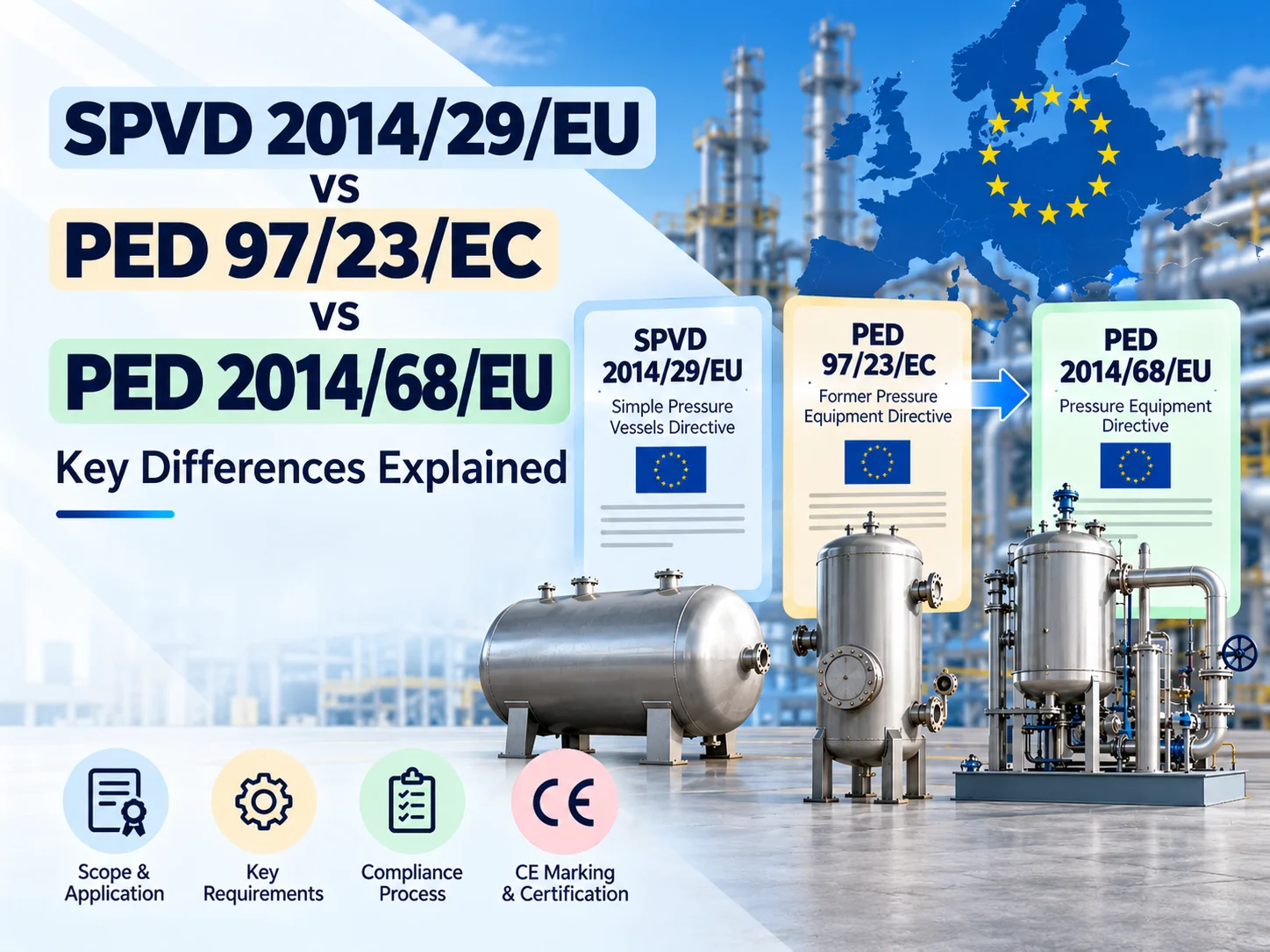
SPVD 2014/29/EU
PED 97/23/EC
PED 2014/68/EU
05 Oct 2026
SPVD 2014/29/EU vs PED 97/23/EC vs PED 2014/68/EU: Key Differences Explained
By Editorial Team
Table Of Contents
- SPVD vs PED: The Relationship at a Glance
- What Is SPVD 2014/29/EU?
- What Was PED 97/23/EC?
- What Is PED 2014/68/EU?
- SPVD 2014/29/EU vs PED 2014/68/EU
- PED 97/23/EC vs PED 2014/68/EU
- Did PED 2014/68/EU Replace SPVD 2014/29/EU?
- SPVD vs PED: Which Directive Applies?
- How to Determine the Applicable Directive
- Why Welding Compliance Matters
- Key Differences: Quick Summary
- Conclusion
- FAQ
Related Blogs
SEP
11
SPVD Certification 2026: Latest 2014/29/EU Update, EN 286-1, Documents & CE Marking for Indian Manufacturers
AUG
06
SPVD Certification: Complete Guide to the Simple Pressure Vessels Directive (2014/29/EU)
See Also.....
Manufacturers of pressure vessels must follow SPVD 2014/29/EU, PED 97/23/EC, and PED 2014/68/EU to meet European compliance standards. PED 97/23/EC has been replaced by PED 2014/68/EU, and SPVD 2014/29/EU applies to simple pressure vessels. It is important to understand these differences to ensure proper EU certification and compliance processes.
SPVD vs PED: The Relationship at a Glance
The relationship can be explained like this:
Simple Pressure Vessels
→ SPVD 2014/29/EU
Broader Pressure Equipment
→ PED 2014/68/EU
Old Pressure Equipment Directive
→ PED 97/23/EC → has been replaced by PED 2014/68/EU
The European Commission treats 2014/29/EU (SPVD) and 2014/68/EU (PED) as two different directives under the EU pressure equipment regulation.
What Is SPVD 2014/29/EU?
The SPVD 2014/29/EU, also known as the Simple Pressure Vessels Directive, outlines rules for designing, making, and checking certain simple pressure vessels in the EU. These rules came into effect on 20 April 2016.The directive applies to pressure vessels that are made by welding, are produced in series, and have an internal pressure higher than 0.5 bar. These vessels contain either air or nitrogen, are not used for firing, and are made from specified types of steel or aluminum. They can hold a maximum pressure of 30 bar, and their product of pressure and volume (PS × V) must not exceed 10,000 bar-L. These conditions are valid within certain temperature ranges.
What Was PED 97/23/EC?
The old Pressure Equipment Directive, known as PED 97/23/EC, was used to set rules for designing and checking pressure equipment that works with pressures higher than 0.5 bar, such as tanks and pipes. This directive has now been replaced by a new directive called 2014/68/EU, which started being used on 19 July 2016 and is the current standard for pressure equipment regulations.
What Is PED 2014/68/EU?
The PED 2014/68/EU sets the rules for making, testing, and checking pressure equipment that has a maximum allowed pressure higher than 0.5 bar. This includes pressure vessels, pipes, and safety parts, but it does not cover simple pressure vessels, which are covered by SPVD 2014/29/EU. This affects how pressure vessels are assessed.
SPVD 2014/29/EU vs PED 2014/68/EU
| Feature | SPVD 2014/29/EU | PED 2014/68/EU |
|---|---|---|
| Full name | Simple Pressure Vessels Directive | Pressure Equipment Directive |
| Main purpose | Simple pressure vessels | Broader pressure equipment |
| Scope | Specific qualifying simple vessels | Pressure equipment and assemblies |
| Pressure threshold | >0.5 bar within defined SPVD scope | PS >0.5 bar subject to scope |
| Typical media | Air or nitrogen | Various fluids |
| Equipment covered | Qualifying simple pressure vessels | Vessels, piping, accessories and assemblies |
| Maximum pressure | ≤30 bar for SPVD vessels | Depends on applicable equipment and classification |
| CE marking | Applicable under SPVD conformity route | Applicable under PED conformity route |
| Classification | SPVD-specific requirements | PED categories/conformity assessment |
| Current status | Current | Current |
SPVD and PED are complementary directives; PED excludes simple pressure vessels governed by SPVD.
PED 97/23/EC vs PED 2014/68/EU
| Feature | PED 97/23/EC | PED 2014/68/EU |
|---|---|---|
| Status | Former PED | Current PED |
| Subject | Pressure equipment | Pressure equipment |
| Applicable until | 19 July 2016 | Current framework |
| Successor | — | Replaced 97/23/EC |
| Pressure threshold | PS >0.5 bar | PS >0.5 bar |
| Equipment | Pressure equipment and assemblies | Pressure equipment and assemblies |
| Compliance | Former conformity framework | Current conformity framework |
| CE compliance | Historical requirements | Current requirements |
The European Commission says that Directive 2014/68/EU replaced 97/23/EC, and 97/23/EC was still in effect until 19 July 2016.
Did PED 2014/68/EU Replace SPVD 2014/29/EU?
The PED 2014/68/EU did not replace the SPVD 2014/29/EU. Instead, the SPVD replaced the 2009/105/EC, and the PED replaced the PED 97/23/EC.
SPVD vs PED: Which Directive Applies?
Use this simplified decision flow when initially identifying the applicable EU directive:
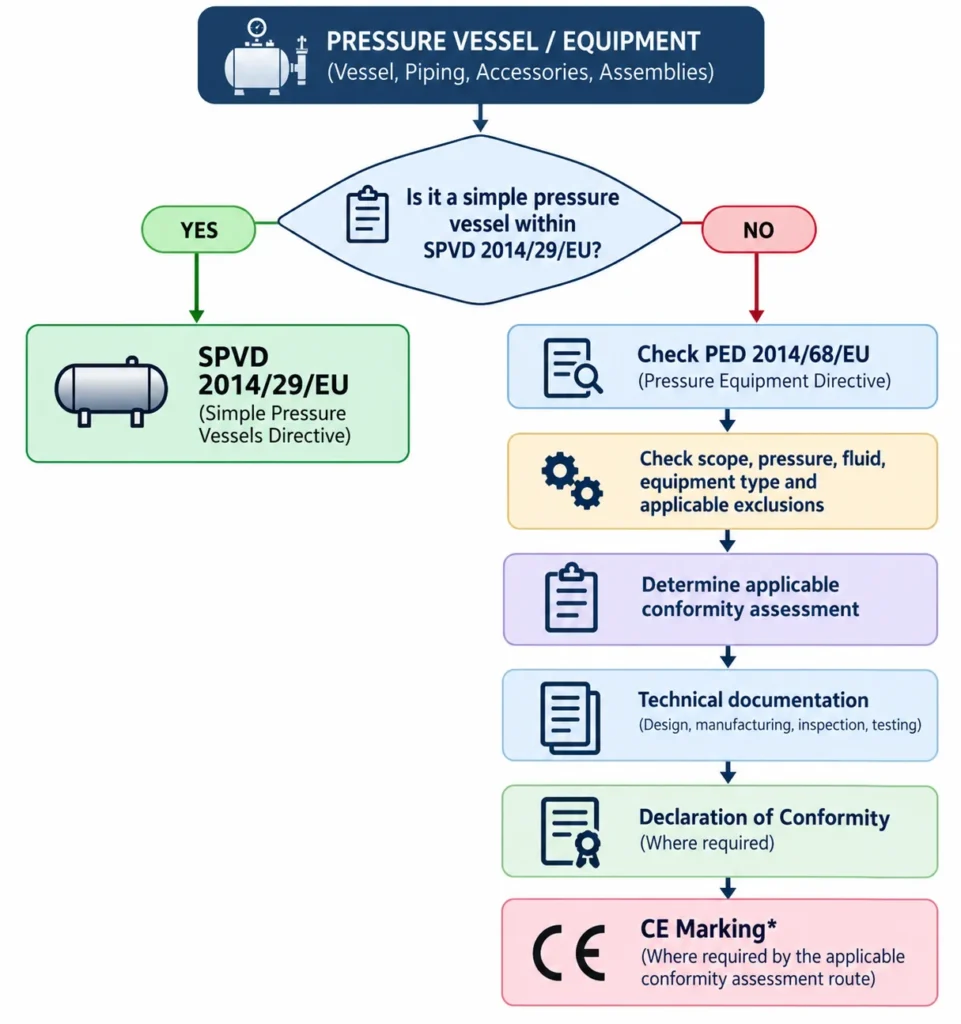
This flow is meant to help screen, but it doesn’t take the place of a full check on whether requirements are met.
How to Determine the Applicable Directive
Before choosing a certification path for EU pressure equipment, manufacturers need to consider the type of equipment, like pressure vessels or piping, the maximum allowable pressure, the classification of the fluid or medium under PED, the vessel’s features such as the type of gas, construction method, materials used, pressure settings, volume, and temperature limits, any exclusions under the directive, and finally, figure out which directive applies and select the right conformity assessment process based on this information.
Why Welding Compliance Matters
Manufacturers who make pressure vessels need to follow rules about welding quality and control. Important documents they must have include Welding Procedure Specifications, Qualification Records, welder qualifications, material certifications, traceability records, non-destructive testing reports, inspection results, pressure testing records, and other technical documents. It’s important to understand the difference between SPVD and PED to make sure their production meets all the required standards.
Key Differences: Quick Summary
| Question | Answer |
|---|---|
| Is SPVD the same as PED? | No |
| Is 97/23/EC still the current PED? | No |
| What replaced PED 97/23/EC? | PED 2014/68/EU |
| What does SPVD cover? | Certain simple pressure vessels |
| What does PED cover? | Broader pressure equipment and assemblies |
| Did PED 2014/68/EU replace SPVD? | No |
| Does PED exclude SPVD vessels? | Yes, where they are covered by SPVD |
| Is CE marking relevant? | Yes, where required by the applicable conformity route |
Conclusion
SPVD 2014/29/EU, PED 97/23/EC, and PED 2014/68/EU are not just different versions of the same rule. PED 97/23/EC was replaced by PED 2014/68/EU. SPVD 2014/29/EU is for simple pressure vessels. Following the right rules depends on the type of equipment, pressure, the substance inside, how it’s designed, any exclusions, and what checks are needed. These rules help manufacturers in the EU to get their pressure vessels certified and marked with the CE symbol.
FAQ
What is the difference between SPVD 2014/29/EU and PED 2014/68/EU?
SPVD 2014/29/EU covers a defined category of simple pressure vessels, while PED 2014/68/EU covers a broader range of stationary pressure equipment and assemblies. Simple pressure vessels covered by SPVD are excluded from PED.
Is PED 97/23/EC still valid?
No. PED 97/23/EC was the former Pressure Equipment Directive and was replaced by PED 2014/68/EU, applicable from 19 July 2016.
What does SPVD 2014/29/EU cover?
It covers certain series-manufactured welded simple pressure vessels, including specified vessels containing air or nitrogen and meeting defined pressure, material, temperature and geometric requirements.
Does PED 2014/68/EU replace SPVD 2014/29/EU?
No. They are separate directives. PED specifically excludes simple pressure vessels covered by SPVD.
What is the pressure limit under SPVD 2014/29/EU?
SPVD applies to qualifying vessels with a maximum working pressure of 30 bar and a PS × V product not exceeding 10,000 bar·L, subject to the other scope conditions.