
EN 1090-3
Aluminium Roof Structures
Singapore Aluminium Fabrication
EN 1090-3 for Aluminium Roof Structures in Singapore: Fabrication, Assembly and Inspection
By First Welding Certification Technical Editorial Team
6 Mins Read Time
28 Oct 2026
Table of Contents
- Introduction
- What is EN 1090-3?
- Which Aluminium Roof Structures could Apply?
- Why should Aluminium Fabricators in Singapore consider EN 1090-3?
- How to Prepare Aluminium Roof Structures for EN 1090-3
- EN 1090-1 vs EN 1090-3
- Common Issues with Aluminium Roof Fabrication
- How EN ISO 3834 could apply
- Frequently Asked Questions
- Related searches
- Conclusion
Aluminium roof structures can be used in commercial, industrial, transport, walkways and architectural structures. Aluminium is a popular choice due to its light weight and resistance to corrosion. When aluminium roof frames and supporting elements are used in a structural application, the manufacturers will need to ensure that they can provide evidence that they are manufactured, assembled and inspected in accordance with the requirements.
For aluminium fabricators in Singapore providing structural roof systems to international projects, understanding EN 1090-3 can help you prepare for the requirements.
Below we explain how aluminium roof structures manufacturers can prepare.
What is EN 1090-3?
EN 1090-3 is a part of the EN 1090 series and sets out the technical requirements for the manufacturing of aluminium structures. This includes structural elements manufactured using aluminium products such as extrusions, plates, sheets, rods, bars, tubes, forgings and castings.
It covers important aspects such as material identification, preparation, welding, mechanical fixing, assembly and documentation of the execution. These requirements apply to aluminium structures that are subject to mainly static loading and fatigue loading within the scope of this standard. Depending on the design of the aluminium roof structure, the requirements will vary based on what you are manufacturing, the execution requirements and the type of element.
Not all aluminium roofs, canopies and roofing products will fall under EN 1090-3. You will need to ensure that you are looking at the correct standard and conformity.
Which Aluminium Roof Structures could Apply?
EN 1090-3 could apply to structural aluminium elements such as:
- Aluminium roof trusses and structural roof frames
- Aluminium beams, columns and supportive elements
- Aluminium canopy frames and supportive elements
- Roof support assemblies for industrial and commercial buildings
- Aluminium space frames and engineered assemblies
- The key factor here will be the function of the product.
Before deciding if you need to comply with EN 1090 requirements, you should review your project requirements and standards.
Why should Aluminium Fabricators in Singapore consider EN 1090-3?
You could be manufacturing aluminium roof elements for local projects or overseas. If the project or market requires you to comply with EN 1090 then you will need suitable controls in place to ensure that you are meeting the requirements.
- Cut, Machining and Assembly Controls
Having procedures in place will help ensure that you are manufacturing aluminium members in accordance with the approved drawings and specifications.
- Material Identification
Ensure that you have the correct aluminium grades, tempers and dimensions and have material inspection documents. Having controls in place for material traceability will help link the incoming materials to the elements being manufactured.
- Welding Controls
If welding is required, you will need to ensure that you have the correct welding procedures, qualified personnel and inspection requirements. Mechanical fixings and other welding methods will also need to be controlled.
- Inspection Records
Having inspection records will help show that dimensions, joints, assembly and other requirements have been checked.
- Preparing for International Projects
Customers and project teams may ask for evidence of your controls and conformity. By having controls in place early on, you can prepare for projects requiring EN 1090 requirements.
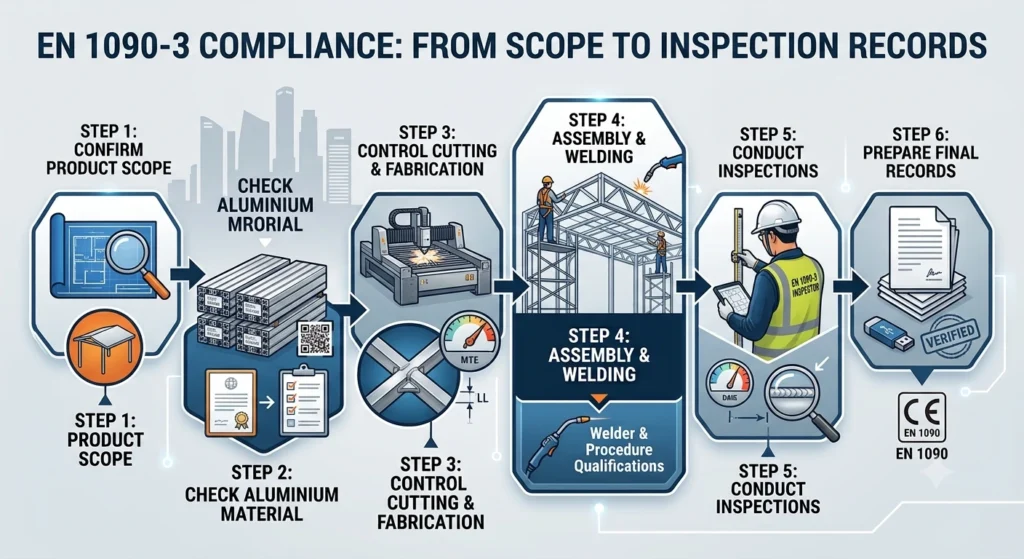
How to Prepare Aluminium Roof Structures for EN 1090-3
Start by understanding what the scope of your product is and what the execution requirements are. Below are some steps to help you:
Step 1 – Understand your Roof Structure Design & Specifications
- Identify what elements you will be manufacturing, such as beams, trusses, columns, brackets, joints and supportive assemblies.
- Review the approved drawings, aluminium grades, dimensions, joints, tolerances, surface finishes and inspection requirements.
- Confirm what class of execution is required and other requirements with your design and project team.
Step 2 – Check Materials
- Ensure the aluminium products are the correct grade, temper, dimensions and have the required technical requirements.
- Ensure you have purchase records, material certificates and inspection documents. Ensure you have a system for material identification and traceability.
- Ensure that if you are cutting down aluminium members, you have the identification in place.
Step 3 – Cut & Machining Controls
Often roof frames will have elements that need to fit together accurately. Ensure that you are cutting, drilling, machining and preparing elements in accordance with the approved drawings.
Controls should be in place for:
- Lengths of members
- Angles of cut
- Position and size of holes
- Edge and surface quality
- Identification of components
To help ensure that there aren’t any fit up issues, controls should be in place.
Step 4 – Welding Controls
- Some aluminium roof structures will have welded joints, some will be bolted or a combination of both.
- If you are manufacturing welded elements, identify the welding requirements, have suitable welding procedures, qualified personnel and inspection. The welding plans and acceptance criteria should be in line with the required execution specification.
- If you are making bolted assemblies, check the fixings, hole alignment, joints and installation requirements.
- The exact controls will depend on design, joints and standard.
Step 5 – Inspection
Before sending off your roof assemblies, ensure you have inspected them in accordance with the approved drawings and inspection requirements.
This may include:
- Overall dimensions
- Member alignment
- Joint positioning
- Hole positioning
- Joint quality
- Joint acceptance (welds)
- Assembly fit up
- Surface quality
- Protection finish
- Component identification
Ensure you have records of your inspection and rectify any non-conforming items.
Step 6 – Surface Preparation Controls
Aluminium roof structures may be exposed to rain, humidity, coastal environments and other environmental factors. Ensure that the surface finish is suitable for the project requirements.
If there is a coating or other protection, ensure you have controls in place for the surface preparation, application and inspection. Not all aluminium alloys will be suitable for the same coating.
Step 7 – Document Controls
Ensure you have clear records to help with your manufacturing and inspection. This could include:
- Approved drawings
- Execution requirements
- Material certificates
- Identification
- Cutting records
- Welding procedures and personnel (if required)
- Inspection and dimensional records
- Non-conformances and corrective actions
- Surface preparation (if required)
- Final manufacturing records
Your requirements should be determined by your standard, conformity and customer requirements.
EN 1090-1 vs EN 1090-3
EN 1090-1 sets out the requirements for the conformity of structural components. EN 1090-3 sets out the technical requirements for the execution of aluminium structures.
As an aluminium roof structural component manufacturer, it is important to understand that whilst there are requirements for fabrication, this isn’t the same as proving that your product is conforming.
Depending on the scope, use, market and legislation, some roof components may require certification, CE marking or other conformity routes. Ensure that you know what is required before stating that you are compliant.
Common Issues with Aluminium Roof Fabrication
Material Identification:
Long aluminium profiles and plates can be cut into many pieces, causing issues with identifying materials. Having a process in place for identification and transferring will help with traceability.
Incorrect Dimensions & Joints:
Out of date drawings or uncontrolled changes can cause incorrect dimensions and joints. Having a controlled change process will help ensure that you’re using the approved information.
Lack of welding controls:
If there is welding required, informal processes can cause a lack of controls for procedures, qualified personnel and inspection. Having clear roles and keeping records will help.
Lack of Inspection Records:
Sometimes components can look acceptable but without inspection or material records, this can cause delays with customers approving. Planning what you need to document will help avoid issues.
Unclear Product Scope:
Not all aluminium roofing products will be structural components. Ensuring that you understand what your product does and what requirements apply will help you avoid choosing the wrong conformity route.
How EN ISO 3834 could apply
If there are welded elements in your aluminium roof structure, you may also need to consider the quality of your welding. EN ISO 3834 sets out the quality requirements for fusion welding of metallic materials.
Depending on your product, materials, welding and project requirements, this could apply. This shouldn’t be seen as an alternative to EN 1090 requirements. Not all roof fabricators will have the same scope of certification.
You should work out what welding and structural requirements apply.
Frequently Asked Questions
What is EN 1090-3?
EN 1090-3 sets out technical requirements for the execution of aluminium structures. This can apply to structural roof frames and elements depending on the scope of the product and project requirements.
Do all aluminium roof systems require EN 1090-3?
No, it will depend on the function, scope, use and relevant regulations/project requirements. Not all aluminium roofing products will be structural components.
What records should Aluminium Roof Fabricators have?
Depending on the project, you may need material certificates, traceability, approved drawings, manufacturing records, welding (if required), inspection and final delivery documents.
Is welding qualification important for aluminium roof frames?
If you have welding, ensure you have the correct welding procedures, qualified personnel and inspection. This will depend on your standard and execution requirements.
Is EN 1090-1 the same as EN 1090-3?
No, EN 1090-1 sets out requirements for the conformity of structural components whereas EN 1090-3 sets out technical requirements for the execution of aluminium structures.
Related Searches
- EN 1090 WPS & WPQR Requirements: Ensuring Welding Quality and Compliance
- EN 1090 Audit Checklist: Complete Guide to Pass Your Certification Audit (2026)
- EN 1090 GUIDE ELEMENTS EN 1090 Execution Classes: Complete Guide to EXC1, EXC2, EXC3 & EXC4
- EN 1090 Standard: Which Companies Need It in India & International Markets in 2026?
Conclusion
For manufacturers in Singapore producing structural aluminium roof frames, trusses, canopies and supportive assemblies, understanding the scope of your product and project requirements will help you prepare for EN 1090-3.
By having traceability for materials, controls in place for manufacturing, suitable joints, dimensional inspection and full records, you can have a more reliable manufacturing process. Before seeking certification, ensure you know what standards and conformity requirements apply to your products and target markets.
Are you looking to manufacture structural aluminium for an international project?
First Welding Certification Pvt Ltd (PRVÁ ZVÁRAČSKÁ, a.s.) can help you explore the relevant welding quality and certification requirements for your application.