
EUROPEAN COMISSION
CHECKLIST
FAQ
1 Aug 2026
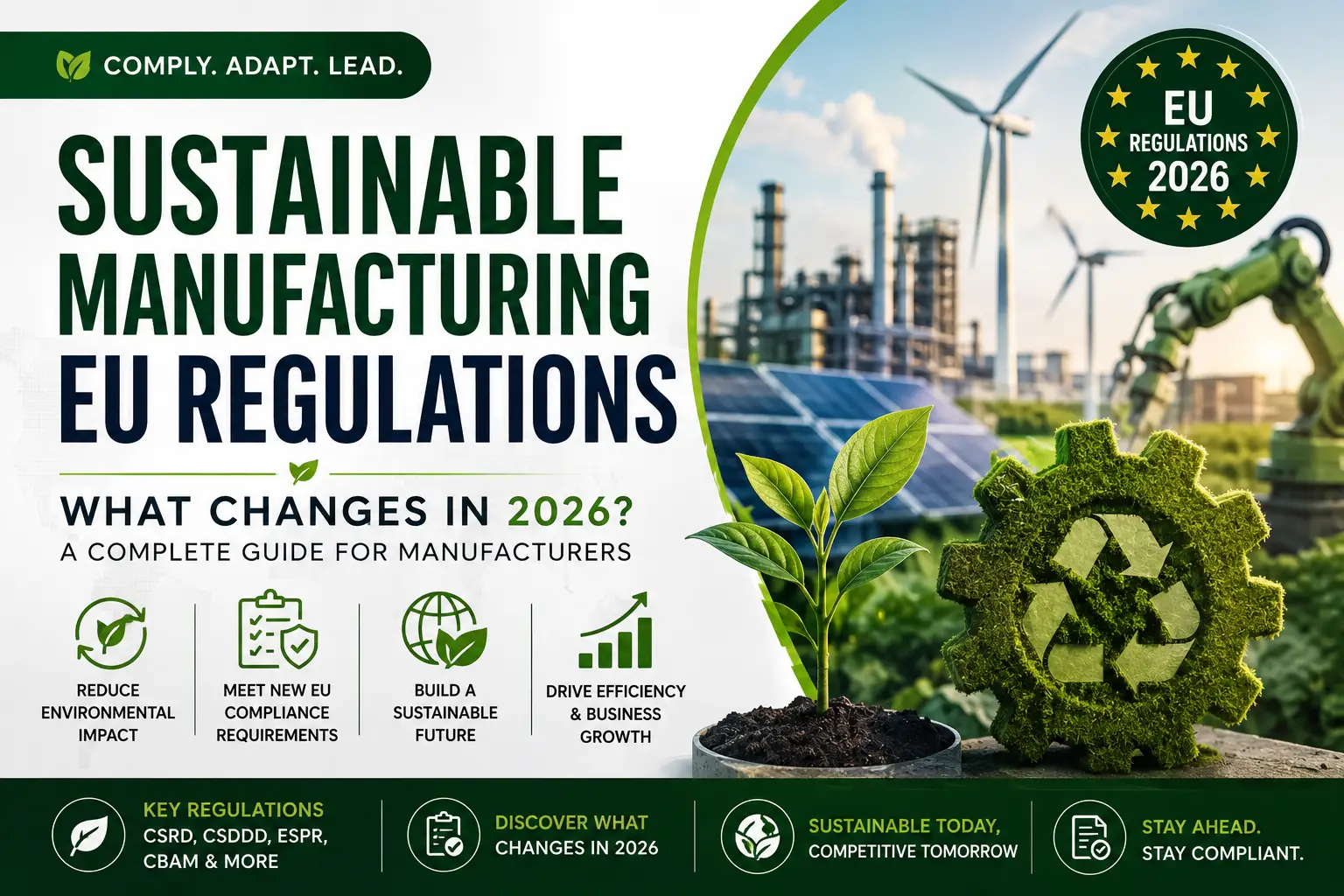
Sustainable Manufacturing & EU Regulations What Changes in 2026
By Editorial Team
Table Of Contents
- What is Sustainable Manufacturing?
- Why the EU is Strengthening Sustainability Regulations
- Key Drivers Behind the 2026 Changes
- How These Changes Affect Global Manufacturers
- 1. Ecodesign for Sustainable Products Regulation (ESPR)
- Key Objectives of ESPR
- How ESPR Impacts Manufacturers
- 2. Digital Product Passport (DPP)
- Typical Information in a Digital Product Passport
- Benefits of the Digital Product Passport
- 3. Eco-design Requirements
- Core Eco-design Principles
- Practical Actions for Manufacturers
- Key Takeaways
- 1. Carbon Border Adjustment Mechanism (CBAM)
- How CBAM Affects Exporters
- Challenges Under CBAM
- 2. Corporate Sustainability Reporting Directive (CSRD)
- Key Reporting Areas
- 3. Circular Economy Requirements
- Core Circular Economy Principles
- Practical Steps for Manufacturers
- Key Takeaways
- How the 2026 Regulations Impact Manufacturers
- Industry-Specific Examples
- Step-by-Step Compliance Roadmap
- Sustainability Readiness Checklist
- Implementation Best Practices
- Preparing for Future Regulations
- Frequently Asked Questions (FAQs)
- Future Trends: 2027–2030
- Key Takeaways
Related Blogs
AUG
20
How Indian Steel Manufacturers Can Prepare for the EU Digital Product Passport in 2026
AUG
09
How Indian Steel Manufacturers Can Export to Europe in 2026: The Complete EU Compliance Roadmap
JLY
20
EU CBAM Explained: Impact on Indian Manufacturers, Exporters and Industries – Complete Guide 2026
See Also.....
- Why Malaysia's Rail Boom Means More Fabricators Need EN 15085 Certification
- Which Industries and Manufacturers Need ISO 3834 Certification in India and International Markets? Top 10 Sectors That Need It
- What Are the Latest PED 2014/68/EU Pressure Vessel Regulations, Design Standards, Safety Factors and Certification Requirements in 2026 for Indian and Global Manufacturers?
Across Europe, sustainability is no longer a corporate initiative—it is becoming a regulatory requirement. Manufacturers that export products to the European Union are expected to demonstrate not only product safety and quality but also transparency, resource efficiency, environmental responsibility, and lifecycle performance.
Driven by the European Green Deal, the EU is introducing regulations that reshape how products are designed, manufactured, documented, transported, used, repaired, and recycled. These changes affect manufacturers worldwide, including exporters from India, the Middle East, and Asia supplying steel structures, machinery, pressure equipment, electrical products, and industrial components.
Organizations that prepare early can reduce compliance risks, strengthen customer confidence, and gain a competitive advantage in European markets. Those that delay may face increased documentation burdens, higher compliance costs, supply chain disruptions, and barriers to market access.
What is Sustainable Manufacturing?
Sustainable manufacturing is the practice of producing goods while minimizing environmental impact, conserving natural resources, improving energy efficiency, reducing waste, and supporting long-term economic and social responsibility. It goes beyond regulatory compliance by integrating sustainability into every stage of the product lifecycle—from design and raw material sourcing to production, distribution, maintenance, and end-of-life recycling.
| Traditional Manufacturing | Sustainable Manufacturing |
|---|---|
| Linear production | Circular production |
| High energy consumption | Energy-efficient processes |
| Limited recycling | Material recovery and reuse |
| Reactive compliance | Proactive sustainability |
| Minimal lifecycle tracking | Full product lifecycle management |
| Waste disposal | Waste reduction and resource optimization |
Why the EU is Strengthening Sustainability Regulations
The European Union has committed to becoming climate-neutral by 2050. To achieve this objective, policymakers are introducing legislation that promotes eco-design, circular economy principles, carbon reduction, digital product information, and supply chain transparency.
Manufacturers are increasingly expected to measure environmental performance, reduce greenhouse gas emissions, improve resource efficiency, and provide reliable sustainability data throughout the supply chain.
Key Drivers Behind the 2026 Changes
- European Green Deal implementation
- Climate neutrality goals
- Carbon emission reduction targets
- Circular Economy Action Plan
- Greater consumer transparency
- Supply chain resilience
- Digital traceability requirements
- Global ESG expectations
How These Changes Affect Global Manufacturers
Although many regulations originate within the European Union, their impact extends globally. Any manufacturer exporting products to EU member states may need to adapt product design, documentation, material selection, quality systems, and traceability processes. Businesses that align with these expectations early are better positioned to win contracts, satisfy customer audits, and maintain uninterrupted market access.
1. Ecodesign for Sustainable Products Regulation (ESPR)
The Ecodesign for Sustainable Products Regulation (ESPR) is a cornerstone of the European Green Deal and Circular Economy Action Plan. It expands ecodesign requirements beyond energy-related products to a much broader range of products placed on the EU market.
The regulation aims to improve product sustainability by setting performance and information requirements throughout the product lifecycle. Manufacturers are increasingly expected to consider environmental performance during product development rather than treating sustainability as a post-production activity.
Key Objectives of ESPR
- Improve product durability and reliability
- Increase repairability and upgradeability
- Support remanufacturing and refurbishment
- Promote recyclability and material recovery
- Reduce energy and resource consumption
- Limit unnecessary waste generation
- Improve transparency across the supply chain
How ESPR Impacts Manufacturers
Manufacturers should review product design processes, material selection, technical documentation, supplier management, and lifecycle performance. Engineering teams may need to redesign products to reduce material consumption, improve component replacement, and support end-of-life recycling. Documentation will become increasingly important because manufacturers must demonstrate compliance with applicable product requirements.
2. Digital Product Passport (DPP)
The Digital Product Passport is a digital record that provides structured information about a product throughout its lifecycle. It improves transparency for regulators, customers, distributors, service providers, and recyclers by making key product information accessible through digital technologies such as QR codes or other secure identifiers.
Typical Information in a Digital Product Passport
| Category | Example Information |
|---|---|
| Product Identity | Model, serial number, manufacturer |
| Materials | Material composition and recycled content |
| Compliance | Applicable regulations and standards |
| Environmental Data | Carbon footprint and sustainability metrics |
| Maintenance | Repair instructions and spare parts |
| Lifecycle | Reuse, refurbishment and recycling guidance |
| Traceability | Production batch and supply-chain information |
For manufacturers, the DPP encourages better document control, stronger traceability systems, and improved data management. Organizations that already maintain structured technical files, inspection records, and supplier documentation will be better prepared to implement Digital Product Passport requirements.
Benefits of the Digital Product Passport
- Greater customer confidence
- Improved product traceability
- Faster regulatory verification
- Support for circular economy initiatives
- Better maintenance and service planning
- Improved recycling efficiency
3. Eco-design Requirements
Eco-design means considering environmental performance during product design and development. Instead of focusing solely on cost and functionality, manufacturers evaluate how design decisions influence energy use, raw material consumption, maintenance, repair, reuse, and recycling.
Modern eco-design principles encourage engineers to develop products that remain in service longer, generate less waste, and consume fewer natural resources over their lifetime.
Core Eco-design Principles
- Design for durability
- Design for repair
- Design for disassembly
- Efficient material utilization
- Reduced hazardous substances
- Improved energy efficiency
- Recyclable product architecture
- Long-term spare parts availability
Practical Actions for Manufacturers
Manufacturers can prepare by integrating sustainability into design reviews, selecting recyclable materials where appropriate, improving technical documentation, strengthening supplier qualification processes, implementing digital traceability, and training engineering teams on evolving EU sustainability requirements. Performing internal gap assessments against upcoming regulations can reduce future compliance costs and improve readiness.
Key Takeaways
ESPR, the Digital Product Passport, and eco-design requirements represent a shift from product compliance alone to lifecycle sustainability. Organizations that invest early in documentation, traceability, sustainable design, and digital information management will be better positioned to compete in the European market as regulatory expectations continue to evolve.
1. Carbon Border Adjustment Mechanism (CBAM)
CBAM is the European Union’s carbon pricing mechanism for selected imported goods. Its objective is to reduce carbon leakage by ensuring imported products face carbon costs similar to products manufactured within the EU. Manufacturers exporting products such as steel, iron, aluminium, cement, fertilizers, hydrogen, and electricity-related goods should understand how carbon emissions are measured and reported throughout the supply chain.
How CBAM Affects Exporters
- Collect accurate emissions data.
- Improve supplier transparency.
- Maintain carbon calculation records.
- Strengthen environmental reporting processes.
- Prepare for customer requests relating to embedded emissions.
Challenges Under CBAM
Many organizations face challenges gathering verified emissions data from suppliers, standardizing reporting methods, and integrating environmental information into existing ERP and quality systems. Early preparation reduces compliance risks and improves customer confidence.
2. Corporate Sustainability Reporting Directive (CSRD)
The Corporate Sustainability Reporting Directive expands sustainability disclosure expectations for many organizations operating in or serving the European market. While reporting obligations differ depending on company size and legal scope, the directive encourages better transparency regarding environmental, social, and governance (ESG) performance.
Key Reporting Areas
| Category | Typical Information |
|---|---|
| Environment | Energy use, emissions, waste, water |
| Social | Workforce, health & safety, diversity |
| Governance | Policies, ethics, risk management |
| Supply Chain | Supplier sustainability and due diligence |
| Climate | Targets and transition planning |
Even where manufacturers are not directly required to report under CSRD, customers may request sustainability information as part of procurement and supplier qualification processes.
3. Circular Economy Requirements
The EU’s Circular Economy strategy encourages products to remain in use for as long as possible through repair, reuse, refurbishment, remanufacturing, and recycling. Manufacturers are expected to consider the entire lifecycle of a product rather than focusing only on production and sale.
Core Circular Economy Principles
- Reduce raw material consumption.
- Design products for longer service life.
- Support repair and maintenance.
- Enable component replacement.
- Increase recycled content where appropriate.
- Improve end-of-life recovery and recycling.
Practical Steps for Manufacturers
Organizations can prepare by reviewing material selection, improving product traceability, documenting environmental data, engaging suppliers on sustainability performance, monitoring regulatory developments, and integrating sustainability objectives into quality and engineering processes.
Key Takeaways
CBAM, CSRD, and Circular Economy initiatives are transforming expectations for manufacturers exporting to Europe. Businesses that establish reliable emissions data, improve sustainability reporting, and adopt lifecycle thinking will be better positioned for future regulatory requirements and customer expectations.
How the 2026 Regulations Impact Manufacturers
The new EU sustainability framework affects nearly every stage of the manufacturing lifecycle. Companies must go beyond meeting technical specifications and demonstrate responsible product design, transparent supply chains, environmental performance, and robust documentation. Compliance increasingly requires collaboration between engineering, procurement, quality assurance, production, logistics, and senior management.
| Business Area | Expected Changes |
|---|---|
| Product Design | Design for durability, repairability and recyclability |
| Procurement | Source compliant and traceable materials |
| Production | Reduce waste, energy use and emissions |
| Quality | Maintain sustainability-related records |
| Documentation | Expand technical files and lifecycle information |
| Supply Chain | Collect supplier sustainability data |
| Customer Support | Provide maintenance and product information |
Industry-Specific Examples
Steel Fabrication
Review material traceability, recycled content, welding documentation, and EN 1090 compliance while improving carbon reporting.
Pressure Equipment
Integrate PED documentation with lifecycle information, supplier traceability, and sustainable material selection.
Machinery Manufacturing
Design modular equipment with replaceable parts, energy-efficient operation, and long-term spare-part availability.
Construction Products
Focus on environmental declarations, recycled materials, durability, and Digital Product Passport readiness.
Step-by-Step Compliance Roadmap
- Conduct a regulatory gap assessment.
- Identify products affected by EU sustainability legislation.
- Review product design against eco-design principles.
- Map suppliers and collect sustainability information.
- Improve technical documentation and record management.
- Implement digital traceability for products and components.
- Measure energy use, waste generation, and carbon emissions.
- Train engineering, quality, and procurement teams.
- Perform internal audits before customer or regulatory assessments.
- Monitor future EU delegated acts and guidance.
Sustainability Readiness Checklist
- Technical documentation updated
- Product lifecycle information available
- Supplier qualification process reviewed
- Material traceability established
- Environmental KPIs measured
- Repair and maintenance information prepared
- Internal sustainability training completed
- Compliance responsibilities assigned
- Continuous improvement plan documented
Implementation Best Practices
Organizations that succeed typically integrate sustainability into existing quality management systems instead of treating it as a separate initiative. Cross-functional collaboration, early supplier engagement, digital documentation, regular compliance reviews, and continual employee training reduce implementation risks while improving operational efficiency.
Preparing for Future Regulations
EU sustainability legislation will continue evolving beyond 2026. Manufacturers should establish a continuous compliance program that reviews regulatory updates, evaluates product impacts, and incorporates sustainability objectives into strategic planning. Businesses that adopt a proactive approach are more likely to maintain uninterrupted access to European markets and strengthen long-term competitiveness.
Frequently Asked Questions (FAQs)
1. What is sustainable manufacturing?
It is the practice of producing goods while minimizing environmental impact, optimizing resource efficiency, reducing waste, and considering the entire product lifecycle.
2. What is ESPR?
The Ecodesign for Sustainable Products Regulation establishes sustainability requirements for products sold in the EU, focusing on durability, repairability, recyclability, and transparency.
3. What is a Digital Product Passport?
A Digital Product Passport stores product information such as material composition, compliance details, repair guidance, and lifecycle data in a digital format.
4. What is CBAM?
The Carbon Border Adjustment Mechanism introduces carbon reporting and pricing considerations for selected imported goods entering the EU.
5. How does CSRD affect manufacturers?
It increases demand for reliable ESG and sustainability information throughout the supply chain, even for many suppliers not directly subject to reporting rules.
6. Why is eco-design important?
It helps reduce waste, improve product longevity, lower environmental impact, and support circular economy objectives.
Future Trends: 2027–2030
The coming years are expected to bring broader implementation of Digital Product Passports, expanded eco-design requirements across additional product groups, stronger carbon accounting expectations, greater use of recycled materials, increased supply-chain transparency, and deeper integration of sustainability into procurement decisions. Manufacturers that build digital compliance systems today will be better prepared for future regulatory evolution.
Key Takeaways
- Embed sustainability into product design from the beginning.
- Maintain accurate technical documentation and traceability.
- Collaborate closely with suppliers on sustainability data.
- Invest in digital documentation and lifecycle management.
- Train employees on changing EU regulatory expectations.
- Monitor new delegated acts and implementation guidance regularly.
Conclusion
Sustainable manufacturing is rapidly becoming a strategic business requirement rather than simply an environmental initiative. The EU’s regulatory framework encourages organizations to design better products, improve resource efficiency, increase transparency, and support the circular economy. Manufacturers that proactively align their quality, engineering, procurement, and compliance processes with these expectations will be better positioned to access European markets, satisfy customer requirements, and build long-term competitive advantage.
How First Welding Certification Private Limited (PRVA ZVARACSKA,a.s.) Can Help
First Welding (PRVA ZVARACSKA, a.s.) as a Notified Body (NB 2408) will certify EN 1090 your products.