
EN 10204
FACTORS
VERIFICATION
06 Nov 2026
EN 10204 Type 3.2 Inspection Cost: 9 Factors That Influence Material Verification
By Editorial Team
Table Of Contents
- 9 Factors That Influence EN 10204 3.2 Inspection Cost
- EN 10204 3.2 Inspection Cost Breakdown
- How to Reduce Unnecessary Inspection Expenses
- EN 10204 Inspection Planning: A Practical Workflow
- Industries That Require EN 10204 Type 3.2 Inspection
- What Should Buyers Check Before Material Acceptance?
- Frequently Asked Questions
- Conclusion
- Related Searches
Related Blogs
OCT
07
What Should Buyers Verify in an EN 10204 Type 3.2 Certificate for Steel Plates, Pipes and Structural Steel in India?
SEP
29
EN 10204 Type 3.2 RFQ Checklist for Indian & Global Buyers: What Should You Ask Manufacturers? Top 10 Questions Before Placing an Order
SEP
23
What Does an EN 10204 Type 3.2 Certificate Contain? Requirements, Third-Party Inspection and International Recognition in India
AUG
20
Steel Traceability for EU Exports: EN 10204, Heat Numbers & Digital Product Passport
AUG
11
EN 10204 Type 3.2 Inspection Certificate: Complete Guide for Manufacturers and Buyers
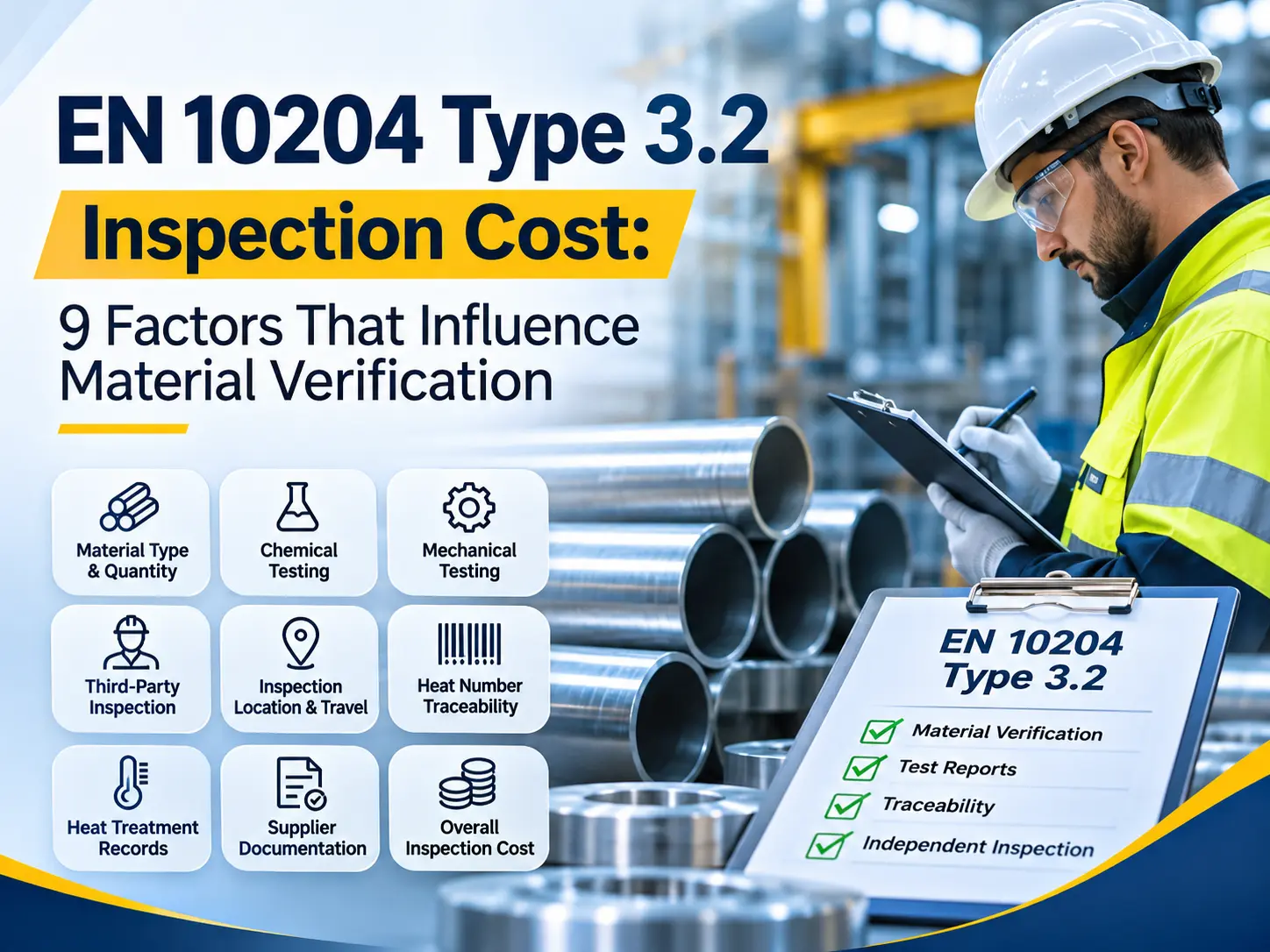
Enterprises providing materials for critical engineering endeavours are obligated to satisfy rigorous technical specifications while delivering authenticated test data, comprehensive documentation, and assurance of material integrity. EN 10204 Type 3.2 certification facilitates this assurance by affording independent validation through designated representatives. Nevertheless, the financial outlay associated with this inspection is not static; rather, it fluctuates according to variables including the material classification, the breadth of the inspection scope, specific testing mandates, geographical location, and unique project parameters. A thorough comprehension of these nine determinants enables organizations to formulate precise and effective strategies for managing inspection expenditures.
9 Factors That Influence EN 10204 3.2 Inspection Cost
1. Material Type and Quantity
Material dimensions, grades and quantities influence inspection time and resources.
Consequently, the examination protocols for stainless steel components necessitate distinct configurations when contrasted with the assessment of substantial quantities of steel piping, pressure vessel alloys, forgings, or castings.
Consequently, the expansion of inspection lot sizes often necessitates supplementary sampling protocols and enhanced material identification verification.
2. Chemical Testing Requirements
Chemical analysis confirms adherence to stipulated compositional standards. Contingent upon the specific product specifications, the testing protocol may encompass:
- Carbon, manganese and silicon
- Sulphur and phosphorus
- Chromium, nickel and molybdenum
The inclusion of supplementary laboratory testing, sample preparation, and analysis may incur additional expenses; however, such testing is not an obligatory component of every Type 3.2 inspection.
3. Mechanical Testing Requirements
Mechanical testing evaluates material properties and performance.
| Test | Purpose |
|---|---|
| Tensile test | Measures strength and elongation |
| Impact test | Evaluates toughness |
| Hardness test | Measures resistance to indentation |
| Bend test | Evaluates ductility |
Expenses are contingent upon the specific assays mandated, the volume of specimens required, the logistical framework of the laboratory, and the extent to which pre-existing test data can be leveraged.
4. Third-Party Inspection and Witness Points
Independent verification may involve document review, material identification, test witnessing and inspection record verification.
| Activity | Cost Consideration |
|---|---|
| Document review | Inspector time |
| Test witnessing | Inspection attendance |
| Material verification | Identification checks |
| Laboratory testing | Testing and sample preparation |
| Final verification | Record review and validation |
The quantity of EN 10204 Inspection Witness Points and Hold Points can significantly impact both the duration of the inspection process and the associated coordination expenses.
5. Inspection Location and Travel
The site of inspection directly influences travel arrangements, lodging requirements, and logistical planning. A manufacturing facility situated in close proximity to an inspection agency might necessitate a diminished allocation of resources compared to a remote offshore or international project site.
Supplementary expenditures may encompass travel logistics, lodging, and numerous on-site inspections.
6. Heat Number Traceability and Material Identification
EN 10204 Heat Number Traceability establishes a definitive linkage between tangible materials and their associated inspection documentation.
Inspectors may verify:
- Heat numbers and batch identification
- Material grades and dimensions
- Product markings
- Material transfer records
- Corresponding mill test certificates
Adherence to EN 10204 material identification protocols effectively mitigates documentation discrepancies and obviates the need for superfluous verification efforts.
7. Heat Treatment and Manufacturing Records
Certain materials necessitate the application of specialized thermal treatments to attain their requisite mechanical characteristics. The inspection process encompasses a comprehensive examination of furnace charts, heat treatment documentation, batch identification protocols, and corroborating test data.
The absence of comprehensive documentation not only necessitates supplementary verification efforts but also precipitates delays in the finalization of inspections.
8. Supplier Documentation and Certificate Verification
Fragmented or insufficient supplier documentation can significantly prolong the duration of inspection processes.
Important documents may include:
- EN 10204 Mill Test Certificates
- Chemical analysis reports
- Mechanical test results
- Heat treatment records
- Material identification record
- Applicable purchase order requirements
The verification of EN 10204 certificates serves to confirm the correspondence between the submitted documentation and the physical materials provided.
In accordance with the stipulated inspection scope, the authenticity of the certificates must be rigorously verified alongside the review of supporting supplier documentation.
9. Inspection Duration and Project Scheduling
The duration of the inspection process is inherently variable, dictated by manufacturing readiness, material availability, the scheduling of testing protocols, and the logistical coordination among inspectors. Incidences such as missed appointments, the absence of requisite samples, or the submission of incomplete documentation can precipitate additional visits, thereby incurring supplementary financial obligations.
Implementing a robust EN 10204 inspection planning strategy before production begins effectively curtails these avoidable expenses.
EN 10204 3.2 Inspection Cost Breakdown
The table provided outlines the principal cost components that organizations must factor into the request for an inspection quote.
| Cost Component | What It Includes |
|---|---|
| Document review | Purchase orders and supplier records |
| Inspection attendance | Inspector time and site visits |
| Chemical testing | Required composition analysis |
| Mechanical testing | Specified mechanical tests |
| Travel and logistics | Transportation and accommodation |
| Traceability verification | Heat numbers and material identification |
| Reporting and validation | Inspection records and verification |
It is crucial to recognize that these figures delineate indicative cost categories rather than immutable fees, particularly given that specific activities may already be integrated within the manufacturer’s existing testing protocols.
How to Reduce Unnecessary Inspection Expenses
The imperative of cost reduction must never entail the degradation of material standards or the breach of contractual obligations.
Enterprises may enhance inspection efficacy by implementing the following protocols:
- Establish requirements at the outset by incorporating Type 3.2 specifications directly into the purchase order.
- Ensure the procurement of supplier documentation by maintaining all test certificates and ancillary records in a state of immediate readiness.
- Establish the testing parameters by delineating the specific chemical analyses and mechanical evaluations that are necessary.
- Orchestrate witness points by planning inspection activities with forethought.
- Ensure traceability by aligning heat numbers precisely with corresponding physical materials and their associated documentation.
- Select a competent agency: Verify inspection competence and suitability for the project.
Adopting these measures mitigates the frequency of redundant site visits, alleviates documentation bottlenecks, and curtails superfluous inspection expenditures.
EN 10204 Inspection Planning: A Practical Workflow
A structured inspection process helps manufacturers and procurement teams coordinate verification activities.
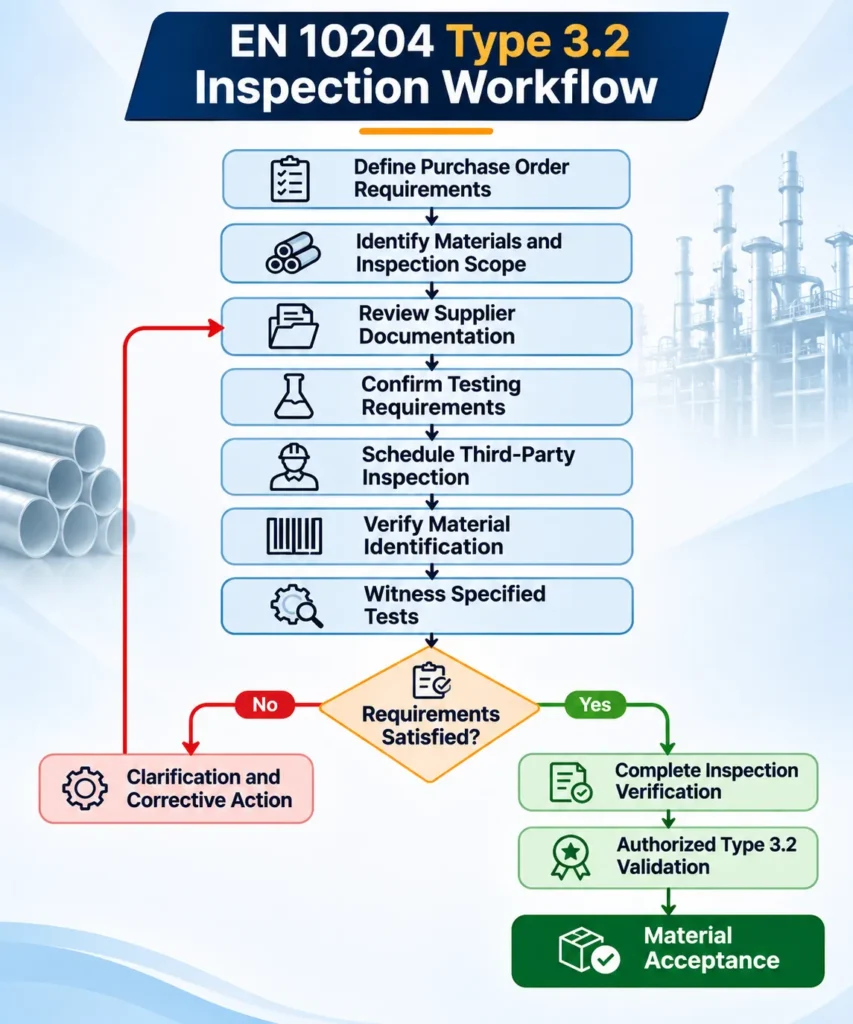
It is important to recognize that this sequence serves merely as an illustrative framework; the specific phases of inspection are contingent upon the governing specifications and the stipulations of the relevant contracts.
Industries That Require EN 10204 Type 3.2 Inspection
Material verification conducted independently holds particular significance within sectors where adherence to material specifications and the ability to trace components are paramount.
| Industry | Typical Materials | Inspection Focus |
|---|---|---|
| Oil and gas | Steel pipes and fittings | Material identification and testing |
| Pressure equipment | Pressure vessel materials | Mechanical properties |
| Offshore engineering | Structural and piping materials | Traceability and documentation |
| Power generation | Forgings and alloy steel | Heat treatment and testing |
| Shipbuilding | Plates pipes and castings | Material conformity |
| Heavy engineering | Stainless steel components | Test verification |
For instance, EN 10204 compliance for steel piping often entails a rigorous verification of dimensional tolerances, heat identification numbers, and associated test data. Conversely, the fabrication of pressure vessels typically demands heightened scrutiny regarding impact resistance evaluations and the documentation of heat treatment processes.
In a comparable manner, forgings, castings, and offshore materials each entail distinct protocols regarding testing methodologies and documentation standards.
What Should Buyers Check Before Material Acceptance?
Prior to the acceptance of materials, procurement and quality assurance teams must validate the following:
- Correct material grade and product specification.
- Aligning thermal data sets with specific batch identifiers.
- Mandatory outcomes from both chemical and mechanical assessments must be attained.
- Documents substantiating the implementation of heat treatment protocols.
- Complete supplier documentation.
- Required inspection witness and hold-point records.
- Conducting the requisite authorization and validation procedures for the Type 3.2 document.
An inspection certificate must invariably be evaluated in conjunction with the relevant contractual stipulations and technical specifications.
Frequently Asked Questions
How much does EN 10204 3.2 inspection cost?
Pricing is inherently variable rather than uniform, as costs fluctuate based on the volume of materials, the extent of inspection, specific testing mandates, the presence of inspectors, and the geographic location of the project.
Does Type 3.2 always require additional chemical and mechanical testing?
Compliance with testing mandates is contingent upon the relevant product specification, the stipulations of the purchase order, and the mutually agreed-upon scope of inspection. Where deemed appropriate, previously obtained valid results may be accepted.
Does material quantity affect inspection costs?
Affirmative. The processing of substantial quantities or numerous material batches often necessitates extended periods for inspection, as well as additional sampling and identification verification.
What is the role of an EN 10204 inspection agency?
An inspection representative, duly designated for the purpose, executes independent verification in strict adherence to the mutually agreed scope. Validation under Type 3.2 mandates the involvement of authorized representatives as stipulated by the relevant standard and governing contractual agreements.
Can businesses reduce inspection expenses?
Indeed. Proactive inspection scheduling, comprehensive supplier documentation, precise testing specifications, and meticulously coordinated witness points serve as critical safeguards against avoidable expenditures.
Is Type 3.2 required for every steel product?
No. Requirements depend on applicable regulations, product specifications and purchaser agreements.
Conclusion
EN 10204 Type 3.2 inspection costs are influenced by material properties, testing, supplier documents, inspection presence, and scheduling. Early planning and documentation help manufacturers manage expenses while ensuring compliance.